
What Are Youth Golf Clubs?
Youth golf clubs are scaled equipment designed around a young player’s height, strength, and developing swing. They are not simply adult clubs made shorter. Club length, total weight, grip size, and shaft flexibility can all affect how comfortably a child stands over the ball and swings through it. A club that feels too heavy may encourage awkward movement. A grip that is too large can make control harder. Small details matter.
Golf-performance expert Dr. Bob Rotella is known for the reminder, “Golf is not a game of perfect.” That idea suits junior equipment choices: the aim is comfortable practice and steady learning, not instant distance or flawless shots. A suitable set might include a driver, a few irons, a wedge, and a putter, but the right mix depends on the child’s age, size, experience, and interest. Fit matters more than filling the bag. A quick check at a golf shop can help families compare club length and feel, while a coach can observe how the young player swings. Children grow quickly, so a good fit today may not last long. That can be frustrating. It is worth checking again as the player grows, rather than assuming one set will suit every season. In this guide, we’ll look at what youth golf clubs are, how they differ from adult equipment, and what to consider before choosing a set.
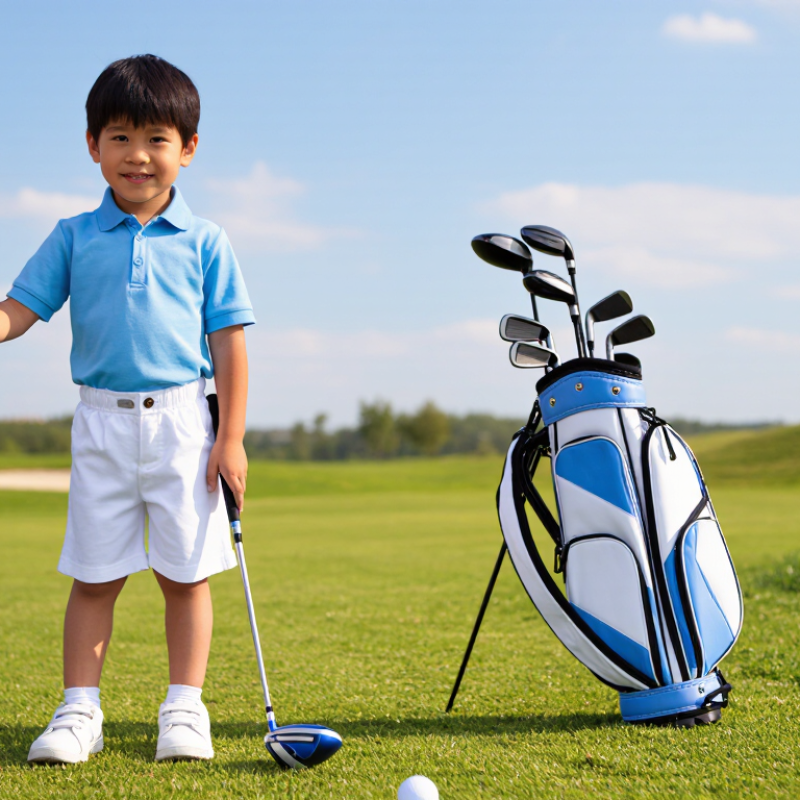
What Youth Golf Clubs Are
Youth golf clubs are golf clubs designed for children and teenagers. They are usually lighter, shorter, and easier to swing than adult clubs. Their proportions match a young player’s height, strength, and developing coordination.
A suitable youth club should allow the child to stand comfortably and control the clubhead. The grip should fit small hands without forcing tight pressure. A shaft that feels too heavy can slow the swing and encourage poor habits. During junior fitting sessions, I look for balanced posture, smooth contact, and enough room for natural growth. A little extra length may be useful, but excessive length creates problems. It can make the club feel awkward.
Youth sets often include fewer clubs than adult sets. A driver, a fairway club, an iron, a wedge, and a putter may provide enough variety for practice. Young golfers do not need every club immediately. They need clubs that make learning manageable. Lightweight clubheads can help players lift the ball, while flexible shafts may support slower swing speeds. However, flexibility alone does not guarantee better results. Fit, weight, and comfort must work together.
Age ranges can be helpful, but height and physical development matter more. Two children of the same age may need different equipment. Parents should watch the player swing, walk, and carry the clubs. The right set should feel encouraging, not exhausting. Even careful recommendations can miss something. A child’s confidence and changing strength may require another fitting later.
| Data Dimension | Typical Youth Specification or Range | What It Means | Why It Matters for Young Players |
|---|---|---|---|
| Primary Purpose | Golf clubs designed for children and younger teenagers | They are scaled for smaller bodies, slower swing speeds, and developing strength. | A properly sized club is easier to control and can help a player develop a consistent swing. |
| Typical Player Height | Approximately 36–66 inches (91–168 cm) | Youth clubs are commonly selected by height rather than age alone. | Children of the same age can have substantially different heights and arm lengths. |
| Common Age Range | Approximately 3–14 years | The range is a general guide; fit should be based on the child’s measurements and skill level. | Age-based categories can simplify shopping, but height and posture provide a more accurate fit. |
| Club Length | Approximately 20–38 inches (51–97 cm), depending on the club and player size | Youth clubs are shorter than standard adult clubs. | Shorter lengths make it easier to maintain balance, control the clubface, and strike the ball cleanly. |
| Club Weight | Typically lighter than adult clubs; exact weight varies by club type and length | Reduced weight helps match the strength and swing speed of a developing player. | An overly heavy club can cause fatigue and encourage poor swing mechanics. |
| Common Shaft Materials | Graphite or other lightweight composite materials | Lightweight shafts are widely used in junior equipment because they reduce overall club weight. | A lighter shaft can make it easier to create clubhead speed without excessive effort. |
| Shaft Flex | Junior or youth flex; some larger players may use softer adult flex options | Flex describes how much the shaft bends during the swing. | A suitable flex can help the club load and release more naturally at a young player’s swing speed. |
| Grip Size | Smaller-diameter grips than standard adult grips | Youth grips are sized to fit smaller hands comfortably. | A grip that is too large can restrict wrist movement and make the club difficult to control. |
| Typical Set Contents | Driver or wood, hybrid or utility club, one or more irons, wedge, and putter | Many youth sets use fewer clubs than a full adult set. | A compact set provides useful shot options without overwhelming a beginner with equipment. |
| Common Iron Selection | Often a mid-iron such as a 7-iron, sometimes combined with a 9-iron | Mid-irons are versatile for learning basic full swings. | They can be easier to use for practice than long irons, which generally require more speed and precision. |
| Wedge Loft | Often approximately 50°–56°, depending on the set design | Higher-lofted clubs launch the ball higher and are useful for short shots. | A wedge helps young golfers learn pitching, chipping, and shots around the green. |
| Driver Loft | Often approximately 15°–22° in youth equipment | Higher loft generally helps produce a higher launch at moderate swing speeds. | It can make it easier for beginners to get the ball airborne than a lower-lofted driver. |
| Clubhead Design | Wide soles, perimeter weighting, and larger hitting areas are common | These features are intended to improve stability when contact is not centered. | More forgiving designs can reduce the effect of common beginner mishits. |
| Typical Set Composition | Usually 3–8 clubs, depending on the player’s size, age, and experience | A starter set is normally smaller than a regulation 14-club set. | Fewer clubs reduce carrying weight and let players focus on fundamental techniques. |
| Bag Weight and Size | Compact, lightweight stand or carry bags | Youth bags are designed to be manageable for smaller players. | A lighter bag encourages children to carry their own equipment safely on the course. |
| Best Fit Check | Balanced stance, comfortable grip, arms hanging naturally, and clubhead resting correctly | Fit should be assessed while the player addresses the ball. | These checks help prevent clubs from being too long, too short, too heavy, or difficult to control. |
| Replacement Timing | When the child outgrows the club or can no longer swing it comfortably | Growth can change the correct club length and weight quickly. | Regular reassessment helps maintain comfort, safety, and suitable swing mechanics. |
Note: Youth club specifications vary by manufacturer and fitting system. Height, wrist-to-floor measurement, strength, swing speed, and playing ability should all be considered when selecting clubs.
Related Posts
-

7 Best Kids Golf Clubs for Every Age and Skill Level
-

Top 10 Youth Golf Clubs for Global Buyers?
-

Why Choose the Right Kids Golf Clubs for Young Players?
-
2026 Top Junior Golf Clubs for Young Golfers to Enhance Their Game?
-
How to Choose the Best Junior Golf Clubs?
-
The Ultimate Guide to Choosing Kids Golf Clubs for Young Golfing Enthusiasts
