Skip to content

7 Tips to Choose the Best Hybrid Golf Clubs

Choosing hybrid golf clubs is no longer a niche decision for struggling long-iron players. It is a practical equipment question for golfers seeking higher launch, softer landings, and more forgiveness.

The R&A’s Global Golf Participation Report 2023 recorded 66.6 million golfers outside the United States across participating markets. The National Golf Foundation reported 28.1 million on-course golfers in the United States during 2023. These figures show a large and diverse audience, but they do not identify one perfect hybrid for everyone. Swing speed, turf conditions, attack angle, and confidence still matter. Small details matter.

Club-fitting expert Tom Wishon states, “There is no such thing as a standard golf club.” That principle should guide every purchase. A 19-degree hybrid may replace a 3-iron for one golfer, yet overlap with a 5-wood for another. Loft gaps can look tidy on paper and fail on the course. Distance can mislead. Carry yardage, landing height, dispersion, and lie performance deserve equal attention. The seven tips ahead examine these practical choices, from loft and shaft profile to head design and fitting feedback. They also question a common assumption: more forgiveness is not automatically better if the club launches too high or produces inconsistent contact. Some advice may feel obvious. It is still easy to ignore. A launch monitor can reveal the mistake. A real fairway can reveal another.
7 Tips to Choose the Best Hybrid Golf Clubs

Define Hybrid Golf Clubs and Their Role in a Golf Bag

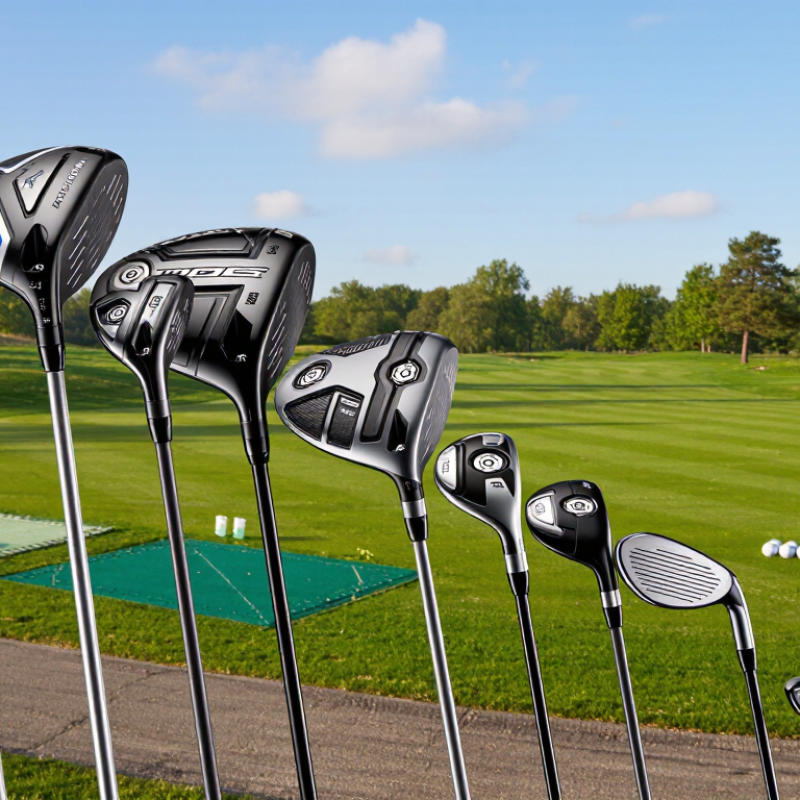
Hybrid golf clubs blend the shape of fairway woods with the control of long irons. Their hollow heads usually create higher launch and more forgiveness. Think of them as gap-fillers. They can replace difficult long irons, especially when confidence fades over longer approach shots.

A hybrid’s role depends on distance spacing, course conditions, and swing comfort. A 4-hybrid may cover the distance of a 4-iron, but its wider sole can slide through light rough more easily. From a tight fairway, that same sole may bounce too much for some players. This detail is often overlooked. In practice, hybrids work well for long par-three shots, second shots on par fives, and recovery swings from uneven lies. They are not automatic solutions.

Choosing the best hybrid starts with loft and carry distance. Test each club with real swings, not only smooth practice swings. Record carry numbers, launch height, and left-to-right dispersion. A launch monitor adds useful evidence, while outdoor testing reveals turf interaction. Check the shaft weight and length, too. A club that launches high but feels unstable may produce poor contact under pressure. Leave a clear distance gap between the hybrid, fairway wood, and longest iron. That gap may look perfect on paper, yet changing weather can expose it.

Assess Your Skill Level, Swing Speed, and Playing Needs

7 Tips to Choose the Best Hybrid Golf Clubs

Assess your skill level before comparing lofts or shaft materials. A higher-handicap player often needs help launching the ball from rough and fairway lies. Choose a hybrid with enough loft to replace a difficult long iron. The USGA and R&A’s 2021 Distance Insights Report recorded average recreational male driving distance near 216 yards. That figure reminds golfers not to copy tour setups. Tour speed is different. Test several clubs with a launch monitor, and record carry distance, launch angle, and dispersion.

Match the shaft to your swing speed, not your ego. A slower swing may benefit from a lighter shaft and higher launch. Faster swings may need greater stability and a firmer profile. A professional fitter can measure clubhead speed, ball speed, and impact location. Also check your playing needs. Use a lower-lofted hybrid for long approaches, or a higher-lofted model for controlled shots from rough. Consider gapping carefully. A 20-yard overlap wastes a place in the bag.

Pay attention to confidence at address. The club should sit squarely and frame the ball without looking intimidating. Test both fairway shots and uneven lies. Indoor numbers can mislead. Wind and turf change results. I once trusted launch data too quickly, then struggled outdoors. That mistake still matters. Choose the club that produces repeatable carry, predictable rollout, and a comfortable swing. The 2023 Arccos Annual Distance Report also shows how playing distance varies by handicap, supporting a personal fitting rather than a one-size-fits-all choice.

Compare Loft, Club Length, and Distance Performance

7 Tips to Choose the Best Hybrid Golf Clubs

Compare loft before chasing distance. A 19-degree hybrid may replace a 3-iron, while a 25-degree model can cover a 5-iron gap. Tip 1: record your current carry distances. Tip 2: check loft spacing, not just the number stamped underneath. The 2023 USGA and R&A Distance Insights Report documented continuing distance gains across player groups. However, extra distance can create awkward gaps. Numbers can mislead.

Tip 3: compare club length carefully. Longer shafts may increase speed, but they can reduce center contact. Tip 4: test clubs with similar shaft lengths when possible. Tip 5: measure carry, rollout, and dispersion separately. PGA TOUR ShotLink data placed the 2024 average driving distance near 300 yards, but recreational golfers need different benchmarks. A fitting session should show five or more solid strikes, not one lucky shot. Feel matters.

Tip 6: examine launch height and descent angle. A hybrid landing softly can outperform a longer club around firm greens. Tip 7: test from fairway grass, light rough, and uneven lies. My own fitting notes were imperfect because I focused too heavily on peak distance. That mistake matters. Ask whether the club produces a reliable 185-yard carry, not a rare 205-yard result. Retest after several swings.

Evaluate Shaft Flex, Clubhead Design, and Forgiveness

7 Tips to Choose the Best Hybrid Golf Clubs

A hybrid should solve a specific problem, not simply fill a distance gap. During fittings, I check launch height, carry distance, and left-right dispersion. The USGA/R&A Distance Insights Report (2021) recorded a 2.5-yard increase in average driving distance, showing that distance alone is a weak buying test. A longer club may create larger misses. My own fitting notes are sometimes messy, too. Real turf often disagrees with perfect range shots.

Tip 1: Match shaft flex to delivery, not ego. Faster swings often need firmer profiles, while slower swings may benefit from easier loading. However, tempo matters. A player with moderate speed can still need a stiffer shaft. Test three flex options with the same head. Compare peak height, carry, and face contact. Do not trust the label alone.

Tip 2: Inspect the clubhead design. A deeper face can inspire confidence, while a compact face may improve control from tight lies. Look for enough sole width to glide through rough. Tip 3: Measure forgiveness through dispersion. Launch-monitor testing should compare mishits, not only perfect strikes. The R&A and USGA report also showed that distance gains vary by golfer type. Forgiveness is personal. A head that launches high may expose poor contact in strong wind, so test it outdoors when possible.

7 Tips to Choose the Best Hybrid Golf Clubs

Use these practical benchmarks when evaluating shaft flex, clubhead design, loft, and forgiveness. Loft values represent common hybrid configurations and may vary by manufacturer.

How to use this chart: Choose a hybrid loft that fills the distance gap between your longest iron and fairway wood. Match shaft flex to your swing speed and tempo, then compare clubhead size, face technology, sole design, center-of-gravity placement, launch height, and forgiveness through testing rather than relying on appearance alone.

Seven Selection Tips

  • Match the hybrid loft to the distance gap between neighboring clubs.
  • Choose shaft flex according to swing speed, tempo, and launch needs.
  • Look for a low center of gravity if you need a higher launch.
  • Select a wider sole for improved turf interaction and stability.
  • Consider a larger clubhead when maximum forgiveness is a priority.
  • Check face design and perimeter weighting to reduce distance loss on mishits.
  • Test several models from different lies and compare launch, dispersion, and carry distance.

Test Comfort, Accuracy, and Value Before Buying

7 Tips to Choose the Best Hybrid Golf Clubs

Tip 1: Test comfort with several swings, not one. Notice the grip, shaft weight, and balance near the clubhead.

Tip 2: Try shots from the fairway, rough, and a firm practice mat. A comfortable hybrid should feel stable without forcing your hands.

Tip 3: Check the club’s length carefully. Extra length may increase distance, but it can reduce control.

Tip 4: Measure accuracy, not just your longest shot. Use ten swings and record direction, carry distance, and strike quality. A launch monitor can reveal patterns that your eyes miss.

Tip 5: Test different lofts against your current irons and fairway clubs. The goal is useful distance gaps, not repeated yardages. I once preferred a faster club, but its inconsistent dispersion cost me strokes.

Tip 6: Compare value through performance over time. Consider durability, adjustability, fitting support, and confidence at address. A cheaper club is not better if it stays unused.

Tip 7: Ask a qualified fitter to review your swing speed and typical miss. Their advice should match measured results, not sales pressure. Test indoors and outdoors when possible. Weather changes can expose weaknesses. My testing is never perfect, and personal confidence can distort judgment. Still, repeated shots on familiar courses provide the most honest evidence.