Skip to content

7 Tips for Global Buyers Seeking Discount Golf Clubs

Global golf is expanding, but equipment prices remain uneven across countries. The R&A’s Golf Around the World 2023 report recorded 66.6 million golfers across 206 countries, excluding the United States and Mexico. That broad participation creates strong demand for reliable, affordable equipment. It also creates confusion for international buyers comparing unfamiliar sellers, currencies, shipping terms, and product descriptions.

This guide explores seven practical tips for choosing discount golf clubs with greater confidence. Buyers should examine shaft flex, club specifications, grip wear, loft details, and the manufacturer’s model history. A scratched sole may be harmless. A bent shaft is not. The United States Golf Association’s conforming club database can help verify whether a model meets current equipment rules, especially for competitive players. The R&A’s equipment standards provide another authoritative reference for buyers outside the United States.

Market evidence also supports careful comparison. The National Golf Foundation continues to report substantial participation in the U.S. golf market, while The R&A identifies sustained global growth. More golfers mean more used inventory, clearance stock, and cross-border purchasing opportunities. However, cheaper does not automatically mean better value. That assumption deserves scrutiny. Shipping fees, import taxes, missing warranties, and inconsistent grading can quietly erase the discount. A club arriving in a plain box may still perform well, but buyers need evidence, not optimism. This introduction sets a practical standard: evaluate condition, legitimacy, specifications, and total delivered cost before purchasing discount golf clubs. Some mistakes remain possible. Careful buyers simply make fewer expensive ones.
7 Tips for Global Buyers Seeking Discount Golf Clubs

Define the 14-Club Limit and Match Discount Clubs to Your Playing Needs

The 14-club limit means a golfer may carry no more than 14 clubs during a formal round. A putter counts. So does every wedge and utility club. You can carry fewer clubs, and many developing players should. More clubs do not automatically create better scores. They can create heavier bags, repeated distances, and expensive confusion.

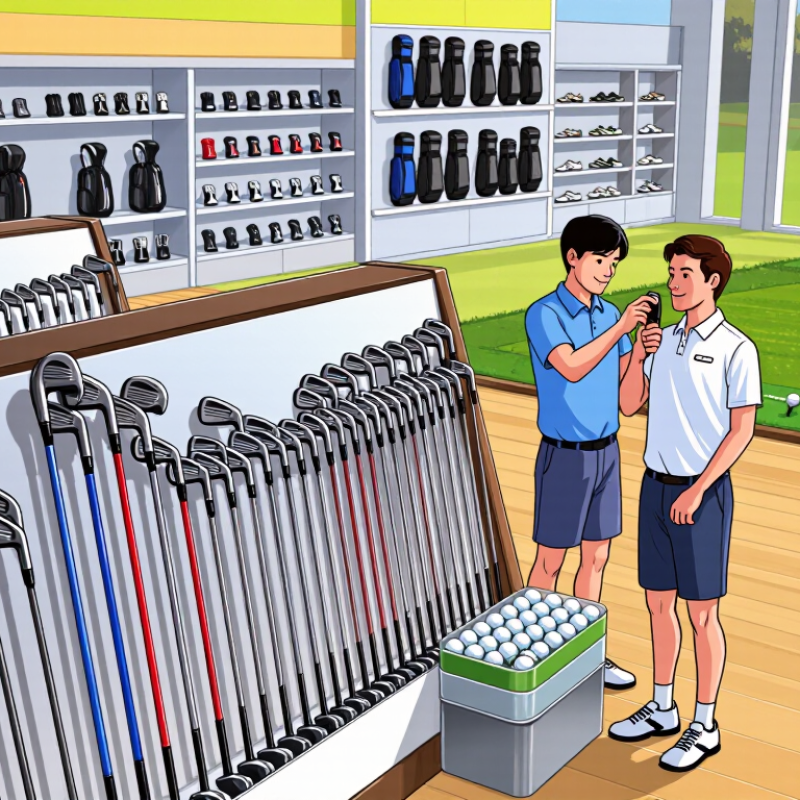
Match discount clubs to your actual playing needs. Start with the distance gaps between your longest iron, fairway club, wedges, and putter. A launch monitor can reveal whether two clubs travel nearly the same distance. Loft matters, but shaft weight, flex, length, and grip size also affect control. A golfer with a moderate swing may prefer a lighter shaft, while a stronger player may need more stability. Test the club, if possible. Numbers alone can mislead.

Be realistic about course conditions. A high-lofted wedge helps firm greens, but it may be unnecessary on soft local courses. Check the club’s condition, groove wear, specifications, and return policy before ordering internationally. Shipping costs and import charges can change a discount quickly. Ask for precise measurements, not vague descriptions. I once underestimated how much an unsuitable grip affected accuracy. That mistake was costly. Discount buying rewards patience, although impatience sometimes wins. A fourteen-club set should fill useful distance gaps, not simply fill every available slot.

7 Tips for Global Buyers Seeking Discount Golf Clubs

Define the 14-Club Limit and Match Discount Clubs to Your Playing Needs

Golf’s Rules of Equipment limit a player to a maximum of 14 clubs during a round. The chart shows one practical 14-club configuration: three woods, seven irons, three wedges, and one putter. Buyers can use this structure to compare discounted club sets with their distance needs, course conditions, and preferred playing style.

Verify USGA/R&A Compliance: Driver COR Must Not Exceed 0.830

When buying discounted golf clubs internationally, verify compliance before comparing prices. For drivers, the coefficient of restitution (COR) must not exceed 0.830 under USGA and R&A equipment standards. This limit controls how much energy returns from the clubface to the ball. A higher rebound may seem attractive, but it can make a driver unsuitable for regulated competition.

Tip: Ask the seller for clear specifications, test documentation, and the exact model identification. Check the official conforming equipment database when possible. Photos of the clubface, sole, and serial markings can expose mismatched or altered equipment. Do not rely on phrases like “tour quality” or “maximum distance.” Those claims prove little. I have seen listings use technical language without showing measurable evidence. That should make any careful buyer pause.

Tip: Confirm the rules for your intended event and country. Some clubs may be acceptable for casual play but restricted in formal tournaments. Also inspect the club physically after delivery. Look for unusual face thickness, fresh paint around the markings, or inconsistent engraving. Keep the invoice and seller’s compliance statements. A low price is useful only when the club remains legal, durable, and accurately described. Mistakes happen, even with experienced buyers. Rechecking the technical details is worth the extra few minutes.

Compare Landed Costs: Include VAT, Duties, Shipping, and Currency Fees

When comparing discount golf clubs globally, calculate the landed cost, not just the checkout price. The cheapest listing may become expensive after import charges.

Add the product price, international shipping, insurance, VAT, customs duties, brokerage, and currency conversion fees. The United Nations Conference on Trade and Development reports that maritime transport carries over 80% of global merchandise trade. Freight delays and port charges can therefore affect your final cost. Ask the seller for the correct HS classification and country of origin. Duty rates often depend on both details.

VAT deserves careful attention. A 20% VAT applied after shipping and duty can change the entire calculation. Currency providers may also hide costs inside exchange-rate margins. Compare the amount charged in your card statement, not only the displayed rate. Keep a small buffer.

The World Bank’s 2023 Logistics Performance Index assessed 139 economies and highlighted customs efficiency, tracking, and delivery reliability. These factors matter when a bargain order crosses borders.

Request a written landed-cost estimate before payment. Include delivery terms, refund responsibility, and damage claims. Incoterms help, but they do not replace local tax advice.

A spreadsheet can still mislead.

For example, a 300-dollar set with 60 dollars shipping may attract duty on the combined value. A currency fee could add another 3%. I would recheck every assumption, especially VAT recovery rules for business purchases. Clearance delays, missing documents, and unexpected storage fees can erase a discount quickly. Reliable buying is less about the lowest sticker price and more about the most defensible final figure.

Evaluate Specs: Check Loft, Shaft Flex, Length, and 5,900 g-cm² MOI Limits

When buying discounted golf clubs internationally, inspect the specifications before admiring the price. Loft controls launch, carry, and spin. A stronger loft may produce distance, but it can also reduce stopping power on firm greens. Compare the listed loft with a trusted club chart, not only the seller’s headline distance.

Shaft flex must match your swing tempo and delivery. A fast, aggressive swing may need a firmer profile, while a slower tempo often benefits from easier loading. Yet flex labels are not standardized worldwide. Test when possible.

Length also changes posture, strike location, and control. A club that is 0.5 inches longer may look appealing, but it can produce heel or toe contact. I once chose extra length for distance and lost consistency instead.

Pay attention to the stated MOI, measured in g-cm². Higher MOI can resist twisting on off-center hits, but it does not make every club forgiving. For conforming drivers, the commonly referenced ceiling is 5,900 g-cm², subject to the current rules and measurement method.

Ask for the exact clubhead measurement and conformity evidence. Be cautious when a discounted listing gives only a vague “high MOI” claim.

Specifications can be copied incorrectly. Also check whether loft, length, and shaft details describe the actual item, rather than a standard template.

Secure the Deal: Confirm Seller Reviews, Warranty Coverage, and Returns

Discount golf clubs attract global buyers, but a low price can hide expensive uncertainty. A seller’s review history deserves more attention than a bright product photo. Check recent reviews, verified purchases, delivery comments, and customer-uploaded images. Look for repeated complaints about worn grips, counterfeit specifications, or missing accessories. A five-star average is not proof. I have learned that polished listings can still omit important details.

The National Golf Foundation reported that 45 million Americans played golf on-course in 2023. Such demand creates a large resale market with mixed product conditions. Ask whether the club is new, refurbished, or pre-owned. Request clear photos of the face, shaft, grip, and serial information. According to the NRF’s 2023 Consumer Returns in Retail report, shoppers returned an estimated 14.5% of retail sales, worth about $743 billion. That figure shows why return terms should be checked before payment.

Read the warranty document, not only the seller’s promise. Confirm coverage length, eligible defects, proof-of-purchase rules, and international shipping responsibilities. Ask who pays return postage and whether customs charges are refundable. The return window should be written clearly, including inspection requirements and refund timing. Do not rush. A short message can reveal poor support. My weak point is assuming every seller follows the same process; global transactions rarely work that simply. Save screenshots of the listing, warranty, reviews, and payment receipt before ordering.