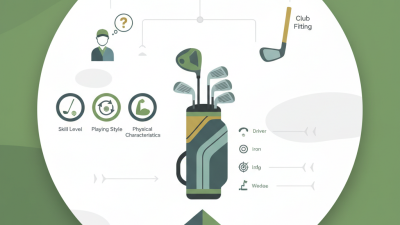
Choosing the best mens golf clubs is not about finding the most expensive set. It is about matching each club to your swing, strength, experience, and playing goals. A beginner carrying stiff steel shafts may struggle to launch the ball. An experienced player using oversized game-improvement irons may lose control around the green. Small details matter.
Tom Wishon, a respected golf-club designer and club-fitting expert, has often emphasized, “There is no such thing as a standard golf club.” That principle guides this discussion. Shaft flex, clubhead design, loft, lie angle, grip size, and total weight can change how a club feels at impact. A fitting session can reveal useful evidence, especially when launch-monitor numbers support the recommendation. Watch the ball flight. Feel the strike. Check the misses.
There is no universal winner.
This guide compares the main categories of mens golf clubs, including game-improvement irons, players’ irons, hybrids, fairway woods, and adjustable drivers. It considers forgiveness, distance control, accuracy, durability, and value. Real playing conditions also matter. A golfer facing wet fairways may prefer higher-launching clubs, while a confident ball striker might value workability.
Still, equipment cannot repair every swing flaw. I have seen golfers blame their irons when poor alignment caused the larger problem. That is worth remembering. The best set should make good swings easier, not promise instant transformation. By examining fit and performance honestly, golfers can choose clubs that support steady progress rather than follow marketing noise.
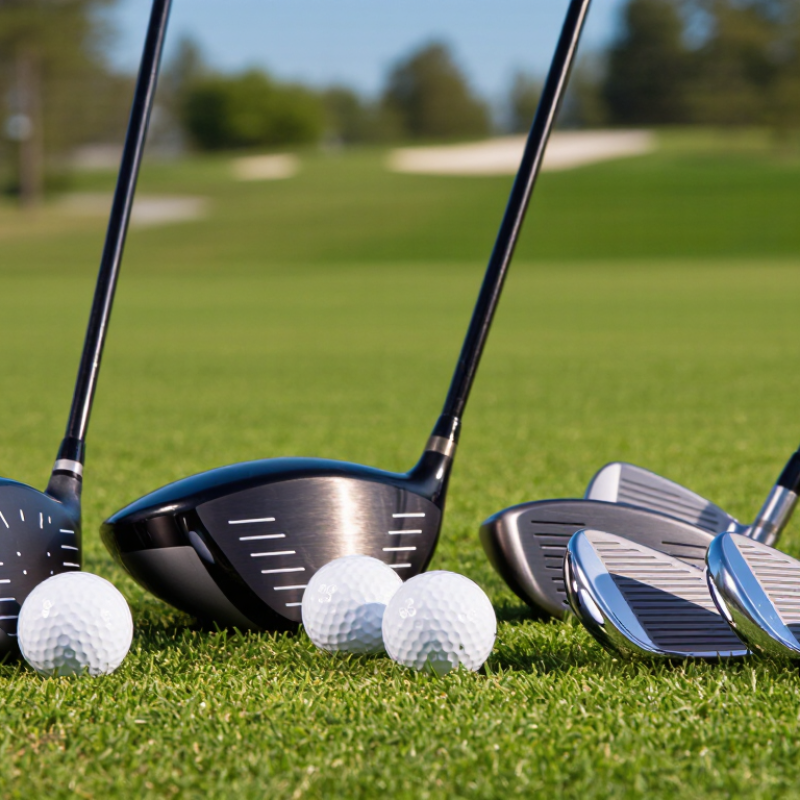
Choosing the best type of men’s golf clubs starts with understanding each club’s job. Drivers and fairway woods create distance from the tee or open grass. Hybrids replace difficult long irons and usually launch higher. Irons control approach shots, while wedges handle short pitches, bunker shots, and delicate chips. The putter is different. It depends more on aim, balance, and feel than raw distance. A complete set should fit your swing, not simply copy another player’s bag.
The USGA and R&A Distance Insights Report recorded a 28-yard rise in average PGA Tour driving distance between 2003 and 2020. That figure shows how equipment and athletic technique can change performance expectations. However, more distance does not automatically mean better scoring. In a fitting session, I would watch strike location, launch height, carry distance, and dispersion. A slower swing may benefit from higher-lofted woods or hybrids. A stronger player might prefer longer irons, but only if consistent contact remains possible.
Golfers often overlook wedges. That is a mistake. Loft gaps should create useful distance steps, especially inside 100 yards. The R&A’s Golf Participation Report 2023 estimated 66.6 million golfers worldwide, showing how varied modern players are. There is no universal “men’s” setup. Body strength, handicap, course conditions, and practice time matter more than gender labels. Even experienced players can choose poorly when they focus only on club length. I would test clubs outdoors when possible, because indoor numbers can hide uncomfortable turf interaction. The perfect set may still need revision after several rounds.
What Is the Best Type of Mens Golf Clubs?
The best clubs match playing needs, not simply a golfer’s gender. Beginners often benefit from forgiving cavity-back irons, a larger hybrid, and a higher-lofted driver. These clubs help when contact drifts toward the toe. They are less punishing. The USGA and R&A’s 2021 Distance Insights Report found only a modest rise in average male recreational driving distance between 2017 and 2020. More distance is not automatically better. A consistent 210-yard shot can beat an erratic 240-yard attempt.
Golfers with slower swing speeds may prefer lighter shafts, wider soles, and higher-lofted fairway woods. These features can launch the ball more easily from tight fairway grass. Mid-handicap players often need a blended set, combining forgiving long irons with more controlled short irons. The National Golf Foundation reported 28.1 million U.S. on-course golfers in 2023. That large population includes very different abilities, so one standard men’s set seems unrealistic. A fitting session can reveal whether the problem is the clubhead, shaft weight, lie angle, or poor setup.
Low-handicap players may choose compact irons for shot shaping and feedback. That control can expose mistakes quickly. I would not assume they are always the best choice. In personal testing, a slightly larger head may produce better results under pressure. Measure carry distance, strike location, launch, and dispersion. Do not judge clubs by one perfect swing. Test them from fairway lies, rough, and uneven ground. The right set should make ordinary shots more repeatable.
Choosing the best type of men’s golf clubs starts with materials, design, and performance needs. Steel shafts usually provide stability, control, and useful feedback at impact. Graphite shafts feel lighter and can help golfers create more clubhead speed. Multi-material designs combine weight placement with vibration control. However, lighter does not always mean better. Some players lose timing when the shaft feels too light.
Clubhead design changes forgiveness and trajectory. A cavity-back iron spreads weight around the perimeter, helping protect off-center shots. A muscle-back iron offers precise feedback but demands consistent contact. Drivers with adjustable weighting can influence launch, spin, and shot shape. Face flexibility may add distance, yet distance alone can hide poor accuracy. In fitting sessions, I compare carry distance, dispersion, launch angle, and strike location. A club that flies far once may still perform poorly across ten swings. I once favored extra distance and ignored directional consistency. That was a costly mistake.
Tips: Test clubs with your normal golf balls and wearing your usual glove. Hit several shots, not just your best one. Notice sound, balance, and how easily the club returns to square. Ask for measured data, including swing speed, launch, spin, and carry. Shaft flex labels are not perfectly standardized, so real testing matters. Your handicap can guide the search, but your swing patterns matter more. Even experienced golfers sometimes choose clubs based on appearance. Good-looking clubs can still feel demanding.
| Club Type | Typical Loft Range | Common Head Materials | Key Design Features | Typical Performance | Best Suited For | Main Trade-Off |
|---|---|---|---|---|---|---|
| Driver | 8°–13° | Titanium face and body; lightweight composite panels may be used | Large hollow head, deep face, adjustable weighting, low center of gravity, and a high moment of inertia | Highest distance and launch potential from the tee; the maximum conforming head volume is 460 cc | Players who want maximum tee-shot distance and have enough swing speed to control a long shaft | Longer shaft length and low loft can make consistent center-face contact more difficult |
| Fairway Wood | 13°–25° | Stainless steel, titanium, or a combination of metal and composite materials | Shallow face, low center of gravity, broad sole, and a smaller head than a driver | High launch with useful distance from the fairway or tee; generally easier to control than a driver | Players who need a long club for fairway shots, long par-5 approaches, or tight teeing areas | Less forgiving than a hybrid or high-lofted iron when contact is low or off-center |
| Hybrid | 16°– thirty-one° | Stainless steel, maraging steel, or titanium with a lightweight crown | Wood-style hollow head combined with an iron-like face profile and a wider sole | High launch, moderate spin, and improved turf interaction compared with long irons | Players seeking a versatile replacement for difficult-to-hit long irons | Can produce excessive draw bias or a higher flight than desired for some faster swingers |
| Long Iron | 19°–27° | Forged or cast stainless steel; tungsten weighting is common in modern cavity-back designs | Thin face, narrow sole, relatively low loft, and perimeter or low-center weighting in game-improvement models | Lower launch and more penetrating flight with strong distance control for skilled ball strikers | Experienced players who prefer a traditional iron shape and can consistently strike the center | Requires greater swing speed and precise contact; typically launches lower than a hybrid |
| Mid Iron | 27°–34° | Cast or forged steel; tungsten may increase perimeter stability | Cavity-back construction, moderate sole width, perimeter weighting, and a balanced center of gravity | Reliable combination of distance, launch, accuracy, and stopping power | Most golfers, especially players wanting a balance between forgiveness and workability | Traditional compact models offer less forgiveness than larger game-improvement heads |
| Short Iron | 35°–45° | Forged carbon steel or cast stainless steel; some designs use a face insert or tungsten weighting | Shorter shaft, wider scoring area, moderate sole width, and a center of gravity positioned for control | Higher launch, more spin, and improved accuracy for approach shots | Players who prioritize precision and predictable distance into greens | Less total distance than longer irons and greater sensitivity to poor swing path or face contact |
| Wedge | 46°–64° | Soft carbon steel, stainless steel, or specialty face materials designed to preserve friction | High-lofted face, specialized sole grinds, pronounced grooves, and bounce angles commonly from 4° to 14° | High spin, precise trajectory control, and versatility around the green | Players who need reliable distance control for pitches, chips, bunker shots, and full approaches | High loft reduces distance; sole design must match the player's angle of attack and turf conditions |
| Putter | Usually 2°–5° | Stainless steel, aluminum, carbon steel, or multi-material construction with an elastomer insert | Blade or mallet shape, face milling or insert, alignment lines, and toe hang matched to stroke type | Designed for distance control, directional stability, and consistent roll rather than maximum ball speed | Every golfer; the best shape depends on alignment preference, stroke path, and impact consistency | Highly specialized designs may improve stability but can feel less adaptable or less traditional |
| General selection guidance: For many male golfers, a mixed set is more effective than using one construction throughout the bag: a forgiving driver and fairway wood, hybrids or cavity-back irons for longer distances, more compact short irons, wedges selected for turf interaction, and a putter matched to stroke mechanics. Shaft flex, shaft weight, club length, loft, lie angle, and strike pattern can affect performance as much as head material or club category. | ||||||
The best men’s golf clubs depend less on gender and more on skill level, swing speed, and ball flight. A beginner often benefits from forgiving irons with a wider sole. These clubs can help reduce damage from off-center strikes. A skilled player may prefer slimmer heads for control and feedback. However, smaller heads punish careless contact.
Swing speed should guide shaft choice. Players with slower speeds usually need lighter shafts and more flexible profiles. This can help the club load during the backswing and launch the ball higher. Faster swingers may need heavier, stiffer shafts to control dispersion. Choosing stiffness by age alone is unreliable. I have seen strong players lose distance with shafts that were too rigid. A launch monitor fitting can reveal carry distance, spin, launch angle, and impact location. Outdoor testing is even better because wind exposes weak ball flights.
Tips:
The best men’s golf clubs are not always the longest or most expensive. A balanced set should match your swing speed, playing goals, and usual course conditions. In my fitting experience, consistent distance gaps matter more than having every club available. A practical set may include a driver, fairway wood, hybrid, irons, wedges, and a putter. Each club should offer a clear purpose. If two clubs travel the same distance, one may be unnecessary.
Tips: Test clubs on grass when possible. Check carry distance, not total distance. Leave about 10 to 15 yards between full-shot clubs. Choose a shaft that feels stable, not simply stiff. A professional fitting can reveal surprising differences.
Your short-game setup deserves careful attention. A pitching wedge, gap wedge, and sand wedge can cover common approach shots around the green. Bounce and sole shape affect how confidently you strike from firm turf or soft sand. A mallet or blade putter should fit your stroke path and alignment habits. I once favored a stronger loft because it looked powerful, but it created an awkward gap beside my next wedge. That mistake changed my view of “complete” sets. Fewer clubs can sometimes produce better decisions. Still, beginners may need guidance before removing clubs. Personal testing remains essential.