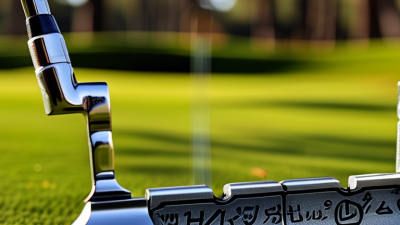
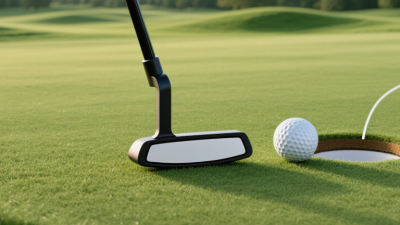
Choosing a putter in 2026 is less about chasing the newest release and more about finding a shape, balance, and feel that suit your stroke. A sleek blade may look reassuring on a shop rack, yet feel awkward over a short putt. A larger mallet can make its alignment lines easier to follow, but its size will not suit every player.
This guide compares putter styles, face designs, alignment aids, and price points to help narrow the choices. It also explains how toe hang and face balance relate to different stroke patterns, without treating either as a universal rule. Small details matter. Grip thickness, shaft length, head weight, and sound can all change how a putt feels. The effect may be subtle, and personal preference can be hard to separate from expectation.
Rather than naming one automatic winner, we look at what each design offers and where it may fall short. Consider testing several models on a practice green with your own golf balls. Try short putts for start-line confidence, then longer rolls for distance control. A showroom mat is useful, but it cannot reproduce every green. That is an imperfect measure, too. Your budget, usual course conditions, and comfort at address deserve equal attention. By the end, you should have a clearer shortlist—and a better sense of which compromises you are willing to make.
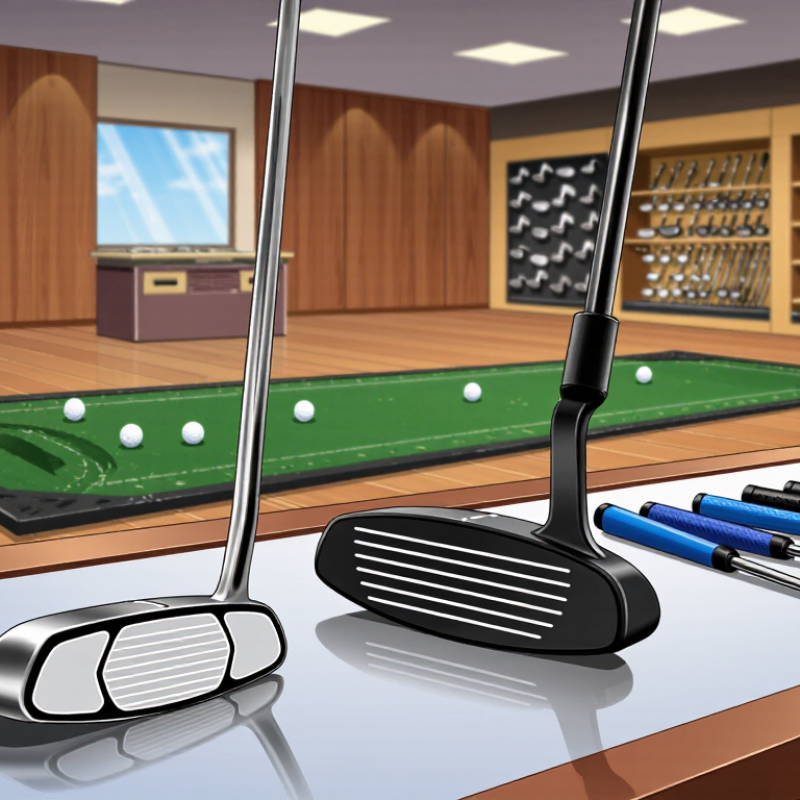
Choosing a putter in 2026 begins with how you aim and move the club, not with a popular shape.
A blade has a narrow profile and usually suits golfers who prefer a compact look and a responsive feel. It can reward a steady arc, but small face-angle errors may send a short putt offline.
Feel matters, too. A mid-mallet offers a broader head and more visible alignment lines without looking oversized. It can be a useful middle ground for players who want clearer aiming cues but still like a traditional stroke.
High-MOI designs use a larger, more stable head to resist twisting on off-center contact. That can help keep mishits closer to the intended line, though it cannot fix poor speed control.
Bigger is not automatically better. Try each category from your usual distance, then notice where the face points before you stroke. Roll several putts across a slight slope, too; a carpet-perfect test can be misleading.
Pay attention to sound, head weight, and whether the sight lines look square to your eye.
I used to focus too much on forgiveness and not enough on aim. That trade-off is easy to miss.
If two shapes perform similarly, choose the one you can set down comfortably and repeat under pressure.
A putter should work with how your face opens and closes, not just look appealing at address. A traditional blade often has more toe hang, which can suit a stroke with noticeable arc and face rotation. Many mallets are closer to face-balanced, helping some players who keep the face more square. These are tendencies, not rules. Head shape alone cannot diagnose your stroke.
Toe hang describes how much the toe drops when the shaft is balanced horizontally. More drop generally suits more rotation; less drop may feel steadier for a straighter path. But comfort matters. I used to treat a stable-looking mallet as an automatic fix, and that was too simple. Not a verdict.
Try several shapes from the same distance on a level practice green. Roll five balls from six to eight feet, watching where they start and whether the face feels easy to return square. Then repeat with another toe-hang style. A gate made from two tees can reveal frequent start-line misses, though it cannot explain every cause. Notice whether you are steering the putter or making a relaxed stroke. Small differences matter. The best fit is the one that helps you aim naturally and repeat your motion under ordinary pressure. Even a good fit may feel strange at first, so give it a few practice sessions before deciding.
A useful putter fitting compares inserts and milled faces on the same green, with the same ball. Record carry distance and start line across several putts from three to ten metres. Softer inserts can change impact feel and sound, while milling often gives a firmer response. Neither feel guarantees better speed control. Listen, but check the numbers.
Alignment should be tested from your normal setup, not from a perfect studio pose. Track how often the ball starts inside a narrow target corridor. Try different sightlines and head shapes; a bold line can help one golfer and distract another. Small details matter. Fitting data on face angle and start-line spread can reveal whether your preferred look actually improves aim.
Stability also deserves a measured test. Compare off-centre strikes and note how much distance and direction change. A more stable head may reduce twisting, but it cannot repair a poor stroke. Keep putter length, lie, and grip consistent while testing, or the comparison gets muddy. I would not trust one unusually good session; fatigue and green speed can skew results. Some readings may still feel at odds with your eyes. Track repeatability over another session before deciding.
Choosing a putter in 2026 starts with fit, not a fashionable shape. Measure length in your normal stance, with your eyes over or just inside the ball. A putter that is too long may pull your hands inward; one that is too short can crowd your posture. Test on a level practice green, then repeat on a slight slope. Feel it. Look down. Record where the sole rests and whether the face returns square.
Loft affects launch and roll. Too little may press the ball into the turf; too much can make it hop before settling. Lie angle matters too: if the sole sits unevenly, the face may point away from your intended line. These are fitting clues, not automatic rule violations. USGA Equipment Rules assess a club’s design, while personal comfort determines whether it suits your stroke. Before competition, check the current rules and relevant conforming lists. A tidy spec sheet cannot replace a real test.
Tips: Ask a qualified fitter to measure loft and lie with the putter held naturally, not forced flat. Hit several putts from six to ten feet, watching both start line and roll. Keep notes. I sometimes trust a single good putt too much; that is a poor test. Recheck measurements after any adjustment, and confirm the finished club remains compliant.
Compare representative putter setups by playing style and fit. The measurements below are illustrative fitting profiles, not specifications for particular products; confirm the exact club’s conformance before tournament play.
| Putter Profile | Typical Stroke / Player | Example Length | Example Loft | Example Lie Angle | What to Look For | USGA Equipment Rule Check |
|---|---|---|---|---|---|---|
| Compact blade | Arcing stroke; player who prefers a smaller head and clear feedback | 33–35 in | 3°–4° | 70°–72° | Choose a length that lets your arms hang naturally and your eyes sit comfortably over or just inside the ball line. | Example lengths exceed the 18-inch minimum. Check the complete club for conformance. |
| Wide-body blade | Slight arc; player wanting a blade-like shape with more stability | 34–35 in | 3°–4° | 69°–71° | Useful when you want a familiar blade appearance but prefer a broader head at address. | Example length is above the 18-inch minimum. Length alone does not establish conformance. |
| Mallet | Straighter-back-and-through stroke; player who favors alignment features | 34–36 in | 2.5°–4° | 70°–72° | Compare alignment visibility, head balance, and how consistently the face returns square for your stroke. | Example length is above the 18-inch minimum. Check the head and other design features as well. |
| Counterbalanced setup | Player seeking a heavier overall feel or a steadier tempo | 36–38 in | 3°–4° | 70°–72° | Test the longer setup for posture, distance control, and whether the added length improves your motion. | Putters are exempt from the general 48-inch maximum club-length limit; the 18-inch minimum still applies. |
| Custom-fit setup | Player whose posture, wrist position, or hand position does not suit standard lengths | 32–37 in | 2°–5° | 68°–73° | Fit length and lie together: sole the putter naturally, then check that the face sits as intended at address. | Example lengths are above the 18-inch minimum. A fitting measurement is not a conformance ruling. |
Rules note: Under USGA Equipment Rules, a club must be at least 18 inches long; putters are exempt from the general 48-inch maximum. The loft and lie figures shown are example fitting measurements, not universal USGA limits. Conformance depends on the complete club design, so check the exact putter against the current USGA rules and equipment-conformance resources.
An eight-foot putt is a useful reality check when choosing a putter. PGA TOUR ShotLink putting statistics place the tour make rate from this distance at about 50%, though rates vary by season and conditions. Not a guarantee. Even highly skilled players miss roughly half, so a putter cannot erase the challenge of pace, aim, and pressure.
Use that benchmark to assess control, not to chase a miracle club. On a level practice green, roll several putts from eight feet toward a small target. Watch whether the face starts the ball consistently and whether misses finish close. A heavier head may feel steadier to one golfer; another may prefer a lighter feel. That preference is personal, and feel alone can mislead.
Compare putters with the same ball, distance, and target. Check alignment from behind the ball, then notice whether the head suits your natural stroke. A useful fit should make a repeatable start line easier, not promise more makes. I would also retest after a short break; fatigue can change your stroke, and one hot streak is weak evidence. The numbers matter, but so does what happens on your own greens.