Why Are Card Board Games Popular With Global Buyers?
Card Board Games have moved beyond family shelves and hobby stores. They now appear in online marketplaces, cafés, classrooms, and travel bags worldwide. Their appeal is simple: players can hold a complete social experience in a small box.
Grand View Research estimated the global board games market at USD 13.06 billion in 2023. Its report projects a 5.9% compound annual growth rate from 2024 to 2030. Mordor Intelligence also forecasts steady expansion, although its market estimate differs. These differences matter. Market definitions are not always consistent.
Still, the direction is clear. Buyers value products that encourage face-to-face interaction without requiring screens. A deck of cards, a compact board, and a few tokens can create laughter around a kitchen table. Many games also support language-light rules, making international adoption easier. Digital reviews, crowdfunding platforms, and cross-border ecommerce have strengthened this movement.
Reiner Knizia, one of the world’s best-known game designers, has said, “A game is a series of interesting decisions.” That idea explains much of the category’s strength. Players choose, negotiate, take risks, and sometimes fail within thirty minutes.
The experience feels personal.
Portability adds practical value. A small card box fits beside a passport or laptop. Families can replay the same game differently each evening. Collectors also enjoy artwork, limited editions, and cultural themes.
Yet popularity does not guarantee success. Translation quality, component durability, shipping costs, and unclear instructions can disappoint buyers. Some games also promise more social connection than they actually deliver.
The strongest brands listen carefully. They test rules, respect local preferences, and publish reliable product details. Global buyers reward that honesty.
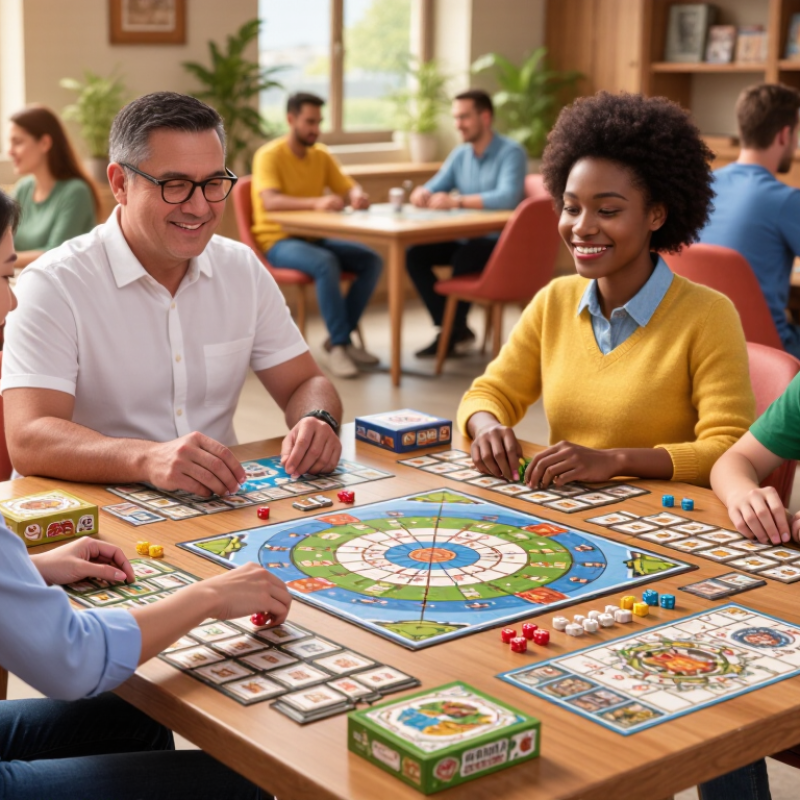
Card board games are tabletop games built around cards, rules, and shared decisions. Players usually draw, hold, reveal, trade, or combine cards to reach a clear objective. Unlike traditional board games, the board may be small, modular, or replaced by a simple play area. This makes the format easy to pack, teach, and replay.
Core features include structured turns, limited information, meaningful choices, and visible progress. A card in hand can feel powerful, risky, or useless within seconds. Good designs balance luck with player skill. They also create interaction without requiring complicated equipment. According to Grand View Research, the global board games market reached about 13.06 billion dollars in 2023, with projected growth of 7.1% annually through 2030. The report covers several tabletop formats, not card board games alone, but it shows strong category momentum. Statista Market Insights also reports continued growth in global games revenue, supported by digital discovery and home entertainment spending.
From practical playtesting, the best card board games often fit on a small table and explain their basic rules in under ten minutes. Durable cards, readable symbols, and clear player aids matter greatly. A confusing icon can damage trust quickly. Replay value comes from changing card combinations, not endless rules. Still, “easy to learn” is sometimes overstated. New players may understand the actions but miss the strategy. That gap deserves more honest product communication.
Why Are Card Board Games Popular With Global Buyers?
Historical Development and Global Expansion
Card and board games have developed from simple tabletop pastimes into widely traded cultural products. Early games used paper, wood, or hand-painted pieces. Their rules often reflected local customs, family structures, and military thinking. Printing technology later made components cheaper and more consistent. This change helped games reach schools, homes, and public meeting places.
The modern expansion accelerated during the twentieth century. Mass production reduced costs, while improved packaging protected cards and boards during long-distance shipping. International travel also introduced players to unfamiliar game systems. A buyer in Europe might discover a strategy game from Asia, then share it with friends through local clubs. Translation became essential. Clear rulebooks, visual symbols, and adaptable themes helped games cross language barriers.
The history is not perfectly linear. Some popular formats disappeared before returning through renewed public interest. Online communities now support global testing, feedback, and rule adjustments. However, digital exposure does not guarantee lasting success. Buyers still examine material quality, replay value, cultural sensitivity, and production reliability. A bent board or unclear instruction can damage trust quickly. My own observation is simple: people often purchase these games for social moments, not just entertainment. Yet this explanation may be incomplete. Collecting, learning, and family tradition matter too. Their continued global appeal comes from combining physical interaction with stories that can travel.
The global board games market expanded as improved printing, international distribution, online communities, and crowdfunding made tabletop products more accessible across regions. The chart shows estimated global market value from 2018 to 2023 and projected growth from 2024 to 2030. Historical values are back-cast estimates, while future values are projections based on a published market baseline and compound annual growth assumptions.
Unit: USD billions. Source basis: published global board games market estimates, rounded for presentation; no company or brand-level data included.
International buyers often choose card and board games because they create direct social interaction. A table, a few players, and clear rules can connect people quickly. Many games also need limited language, especially when symbols, colors, and numbers support the instructions. This helps families, schools, and leisure venues introduce them to mixed-language groups. The experience feels personal. Players negotiate, laugh, and make decisions together.
Shipping is another practical reason for their popularity. Compact boxes usually require less warehouse space and lower transport costs than bulky entertainment products. Buyers can test smaller orders before expanding their selections. Durable cards, sturdy boards, and well-packed pieces also reduce damage during international delivery. From a sourcing perspective, consistent component quality matters as much as attractive artwork. A scratched card can affect trust.
Global buyers also value flexible themes and adaptable rules. A game can suit different age groups, learning goals, or cultural preferences with small changes. Clear translations, readable fonts, and simple setup instructions improve customer confidence. Yet this advantage is not automatic. Some games become confusing after translation, while thin boards may bend in humid climates. I have seen attractive products lose repeat buyers because the storage box was weak. That detail seems small. It is not. Reliable testing across languages, climates, and play styles makes these games more dependable for international markets.
Card and board games carry cultural stories in a small, portable format. A game may use local animals, food, maps, or family traditions. These details help players notice how other communities think and celebrate. Global buyers often prefer games that feel authentic, yet remain easy to understand. Clear symbols and simple rules can reduce language barriers. Still, cultural adaptation is not always accurate. A colorful theme may simplify a complex tradition.
Their social value is equally important. Players sit together, negotiate, wait for turns, and respond to changing decisions. These moments create conversation without demanding formal discussion. In family sessions, younger players can practice patience while adults model fair play. Small groups often reveal quiet leadership. Sometimes, however, competition makes shy players withdraw. Designers and facilitators need flexible rules for cooperation.
The educational value extends beyond memorizing facts. Many games develop counting, reading, planning, visual recognition, and risk assessment. Teachers can use them to observe problem-solving in a relaxed setting. Play also gives learners immediate feedback: a missed move, a better choice, or an unexpected result. The learning is visible. Yet not every game is educational by default. A strong activity needs suitable difficulty, inclusive instructions, and time for reflection. These practical qualities help explain why buyers across regions consider games useful, social, and culturally meaningful.
Why Are Card Board Games Popular With Global Buyers?
Market data shows why card-based board games continue attracting international buyers. Grand View Research valued the global board games market at about $13.7 billion in 2023. It also projects a 7.4% compound annual growth rate from 2024 to 2030. These figures suggest steady demand, not merely a short-lived hobby trend. However, market estimates differ by category and research method.
Buyer preferences are changing in practical ways. Families often choose compact games that fit inside a small cupboard or travel bag. Card formats reduce storage pressure and usually shorten setup time. Social interaction matters too. Players want face-to-face competition, simple rules, and meaningful decisions without constant screen use. Research from Circana has repeatedly identified games and puzzles as resilient parts of the broader toy market, especially when products offer shared household play. That behavior supports demand across age groups.
Online reviews now influence international purchases heavily. Buyers compare playtime, language requirements, component quality, and delivery costs before ordering. Educational value also helps, particularly for parents seeking arithmetic, memory, or negotiation practice. Sustainable packaging is becoming more visible, although buyers may not always pay more for it. That is a weakness in my assessment. Reported growth does not fully explain cultural differences, local pricing, or failed products. A game popular in one region may feel confusing elsewhere, especially when translations miss humor or social context. Local testing remains essential.
A global overview of demand drivers, purchasing behavior, and market development signals
| Market Dimension | Publicly Reported Data or Trend | Influence on Buyer Preferences | Commercial Implication |
|---|---|---|---|
| Overall Market Expansion | Recent public market studies commonly estimate the global board-game market will grow at approximately 7%–10% CAGR through 2030, depending on market scope and product definition. | Buyers are increasingly familiar with tabletop products and more willing to try new formats, including compact card-based games. | Suppliers can support a broader product range, localized themes, and entry-level price points. |
| Digital Discovery and E-Commerce | The International Telecommunication Union reported approximately 5.4 billion people online in 2023, representing about 67% of the global population. | Online reviews, instructional videos, creator content, and digital communities strongly affect product discovery and purchase confidence. | Clear product photography, short rule explanations, demonstration videos, and multilingual listings are important conversion tools. |
| Social Interaction | Consumer research on tabletop entertainment consistently identifies social interaction, shared leisure time, and face-to-face engagement as major purchase motivations. | Games that support small groups, quick conversation, and accessible rules appeal to families, friends, and casual players. | Products should communicate player count, interaction level, and recommended social settings prominently on the package. |
| Portability and Convenience | Card-based games generally require less storage space, use fewer components, and are easier to transport than many large-format tabletop games. | Global buyers value products that can be carried during travel, used in small homes, and stored without dedicated furniture. | Compact packaging and efficient fulfillment can improve shipping practicality and reduce barriers to impulse purchases. |
| Price Accessibility | Card games typically have lower material and packaging requirements than component-heavy tabletop products, although premium editions may command higher prices. | Lower entry costs make the category attractive to first-time buyers and encourage multiple-product purchases. | A tiered assortment can address budget, standard, and premium segments without changing the core gameplay concept. |
| Replayability and Variety | Variable setups, modular rules, random card combinations, and multiple strategies are recurring design features in successful modern tabletop products. | Buyers perceive greater value when one purchase can provide different outcomes across repeated sessions. | Product pages should explain replay value, average session length, learning curve, and available game modes. |
| Family and Educational Use | Educational and family-oriented tabletop activities are widely used to support communication, numeracy, memory, strategy, and problem-solving skills. | Parents and educators often prefer games that combine entertainment with age-appropriate learning outcomes. | Age guidance, learning objectives, reading requirements, and classroom suitability should be stated clearly. |
| Localization and Cultural Fit | International tabletop demand is shaped by language accessibility, local humor, cultural references, and regional preferences for competitive or cooperative play. | Buyers are more likely to adopt products that are easy to understand and culturally relevant in their market. | Localized rules, packaging, customer support, and promotional content can reduce purchase hesitation. |
| Sustainability Expectations | Global consumers increasingly consider packaging waste, material sourcing, durability, and product lifespan when evaluating physical leisure goods. | Durable cards, recyclable packaging, and restrained use of plastic can improve perceived product value. | Manufacturers should provide accurate material information and avoid unsupported environmental claims. |
| Purchase Decision Priorities | Across market research and retail reviews, recurring decision factors include theme, price, age suitability, player count, playtime, perceived quality, and review credibility. | Buyers tend to favor products that communicate their use case immediately and minimize uncertainty before purchase. | The strongest listings combine concise specifications, clear gameplay previews, verified feedback, and transparent shipping information. |