What Are the Top Types of Perfume Atomizers?
Choosing a Perfume Atomizer is not merely a packaging decision. It shapes how fragrance is carried, released, protected, and remembered.
Jean-Paul Guerlain, a respected French perfumer, is often credited with saying, “Perfume is the most intense form of memory.” His observation explains why atomizer design matters. A weak pump can produce a harsh mist, while a fine sprayer creates a soft cloud across the skin. Small details matter.
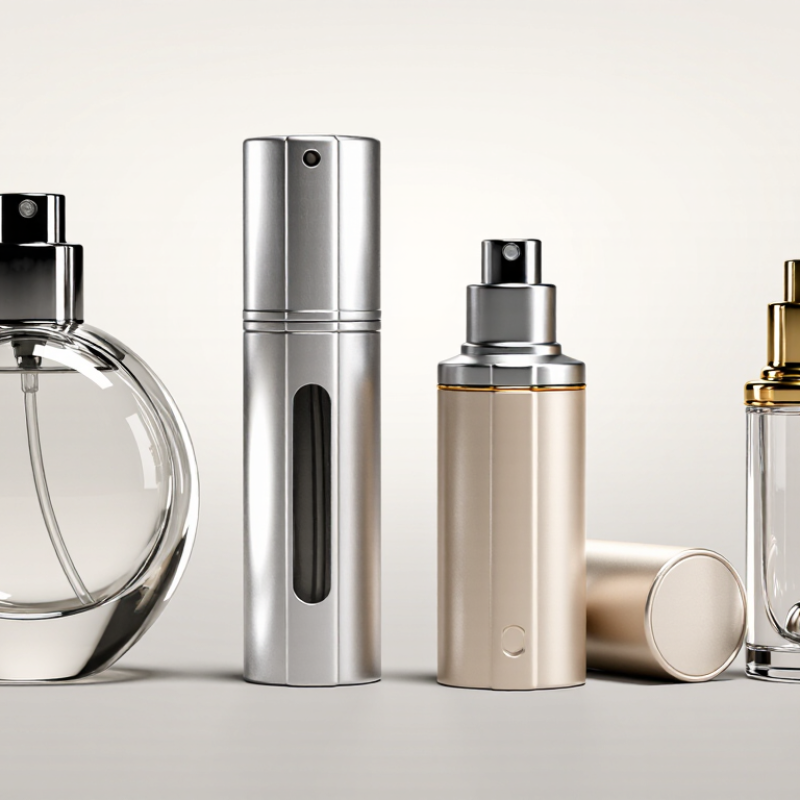
This guide explores the top types of Perfume Atomizer, including glass spray bottles, refillable travel atomizers, pocket-sized aluminum models, and rollerball containers. Each option serves a different routine. A glass atomizer may suit a collector who values visual clarity and stable storage. A refillable travel model fits business trips, handbags, and short journeys. Aluminum versions feel lighter and resist accidental cracks. Rollerballs offer controlled application around the wrists and neck.
The best choice depends on more than appearance. Readers should consider spray quality, seal strength, bottle capacity, cleaning access, and compatibility with their fragrance. Some atomizers claim to be universal, yet their valves may not fit every perfume bottle. That detail is easy to miss.
Performance can vary.
A practical review should also consider leakage during air travel, evaporation after repeated use, and whether the inner materials affect fragrance character. These concerns do not always have one perfect answer. Personal habits matter. This article compares each Perfume Atomizer type through everyday use, design reliability, portability, and long-term value, helping readers choose with clearer expectations rather than attractive assumptions.
What Is a Perfume Atomizer and How Does It Work?
A perfume atomizer is the small pump assembly that turns liquid fragrance into a fine spray. Pressing the actuator moves a stem and piston inside the pump. This draws perfume up through a dip tube, then forces it through a narrow nozzle. The liquid breaks into droplets and spreads across the skin or into the air. A soft hiss. The spray pattern depends on nozzle design, pump pressure, and the fragrance’s thickness.
Most consumer perfume bottles use a crimped or screw-on pump, while travel containers may use a refillable, hand-pressed atomizer. The mechanism is simple, but small parts matter: a loose seal can leak, and a clogged nozzle may produce a stream instead of a mist. Wipe the nozzle gently; do not force a pin into it, since that can damage the opening. Industry context helps explain the scale: Fortune Business Insights valued the global perfume market at US$50.85 billion in 2023 and projected US$76.97 billion by 2032. That market estimate is not a measure of atomizer sales, but it signals why consistent dispensing matters to packaging makers. In practice, even a well-made pump can feel uneven after repeated use. That is worth testing, not assuming away.
What Are the Top Types of Perfume Atomizers? — What Is a Perfume Atomizer and How Does It Work? | Atomizer Type | How It Works | Typical Format | Best Suited For | Practical Considerations |
| Crimp-Pump Spray | Pressing the actuator moves a small pump that draws liquid up through a dip tube and forces it through a nozzle, producing a spray. | Commonly used with a pump secured to the bottle neck by a crimped metal collar. | Everyday perfumes and other fine-fragrance products. | Provides controlled, repeatable doses. The crimped assembly is generally not designed for easy removal or refilling. |
| Screw-On Pump Spray | A manual pump and nozzle dispense liquid in much the same way as a crimp-pump spray; the assembly attaches to the bottle with screw threads. | Refillable or removable pump bottles, including some portable fragrance containers. | Users who want a pump that can be removed for cleaning or refilling, where the bottle is designed for it. | Check that the pump, bottle neck, and fragrance are compatible. A screw top alone does not guarantee that a container is refillable or leakproof. |
| Refillable Travel Atomizer | Usually contains a small manual pump. Depending on the design, it is filled through a removable top or a valve that connects to a compatible spray bottle. | Compact, portable container intended to hold a small quantity of fragrance. | Travel and carrying a small amount of perfume for touch-ups. | Follow the filling instructions for the specific model, avoid overfilling, and keep it closed securely to reduce leakage and evaporation. |
| Sample-Vial Spray | A miniature manual pump draws fragrance from a narrow vial and releases it through a small spray nozzle. | Small sample bottle, often fitted with an integrated spray pump. | Testing a fragrance or carrying a limited amount. | Small capacity means it needs frequent replacement or refilling. Spray output and consistency can vary with the pump design. |
| Bulb Atomizer | Squeezing a flexible bulb sends air through a tube or nozzle. The moving air draws up fragrance and disperses it as droplets or a spray. | Traditional or decorative bottles with a hand-squeezed bulb and connected tubing. | Vintage-style presentation and applications where a bulb-operated dispenser is preferred. | Spray performance depends on the condition of the bulb, tubing, and nozzle. Older assemblies may require careful handling. |
| Aerosol Spray | A valve releases fragrance or a fragranced formulation from a sealed container using stored pressure or a propellant. | Pressurized spray can or container. | Products specifically formulated and packaged for aerosol dispensing. | Not interchangeable with a standard refillable pump bottle. Follow the product label and applicable storage and disposal instructions. |
How Are Perfume Atomizers Classified by Dispensing Mechanism?
Perfume atomizers are commonly classified by how they move liquid and create a spray. The manual pump is widely used: pressing its actuator drives a small dose through a dip tube and nozzle. A well-matched nozzle creates a fine mist; a worn or clogged one may produce larger droplets or a narrow stream. Check the spray pattern on a tissue before use. It should look even, not spit.
Squeeze-bulb atomizers use hand pressure to push air across the perfume and draw liquid into the spray path. They offer a tactile, older-style experience, but the mist can vary with each squeeze. Pressurized atomizers use stored gas to propel the liquid, giving a steady spray while pressure remains. The containers are usually sealed and are not refilled like many pump designs. A practical distinction. When comparing types, consider dose control, cleaning, and how securely the cap fits in a bag. Pump mechanisms are precise, but tiny passages can clog. That is easy to overlook. Perfume formulas and storage conditions also affect performance, so one mechanism may not behave identically with every liquid.
Perfume atomizers can be grouped by how they dispense liquid. Manual pump sprayers and squeeze bulbs use hand-powered mechanical action. Aerosol valves and bag-on-valve systems use stored pressure to expel the product. The chart uses categories, not market-share data.
What Are the Main Types of Perfume Atomizers?
Perfume atomizers differ by spray mechanism, neck fitting, and portability. Fine-mist pumps are common for daily fragrance: a small actuator disperses liquid into a light cloud across the skin. Crimp-fit pumps are secured beneath a metal collar and suit many sealed retail bottles. Screw-fit pumps twist onto the bottle neck, making removal easier for cleaning or replacement. The fit must match the bottle; a mismatch can cause leaks. Small detail, big consequence.
Travel atomizers usually use a compact spray pump and a protective outer shell. Some refill from a larger bottle through a valve at the base, while others are filled through a removable top. Bulb atomizers use a squeeze bulb to push air through the fragrance, creating a softer, less controlled spray. Dabbers and rollerballs are also portable fragrance applicators, though they apply liquid directly rather than atomizing it. They are not true spray atomizers. That distinction is easy to miss.
Market context helps explain the variety. Fortune Business Insights estimated the global perfume market at USD 50.45 billion in 2023 and projected USD 77.53 billion by 2032. This is perfume-market data, not a measure of atomizer sales or preferred pump types. For practical selection, check spray consistency, closure fit, refill method, and whether the atomizer leaves droplets on the skin or clothing. A brief hands-on test often reveals more than appearance alone.
Which Perfume Atomizers Suit Different Usage Scenarios?
A refillable travel atomizer suits commuting, short trips, and gym bags. Choose a tight cap and a spray mechanism that does not leak when jostled. A fine-mist pump works better on a dressing table, where an even cloud helps distribute fragrance across clothing or skin.
Small, but useful.
Test the spray pattern first; some pumps produce a heavier stream than expected.
For sampling or carrying a single day’s dose, a small vial is practical and keeps the main bottle at home. A roller-style applicator offers more controlled placement, though it may feel less convenient when refreshing fragrance quickly.
Grand View Research valued the global perfume market at USD 50.85 billion in 2022 and projected 5.9% annual growth through 2030. That scale points to varied buying habits, but it does not tell us which atomizer each person prefers.
Reusable formats can reduce reliance on disposable miniatures, but only when they are easy to clean and refill. McKinsey’s 2020 US packaging survey found that more than 60% of respondents would pay more for sustainable packaging. That broad finding is not perfume-specific.
I still find one trade-off easy to miss: a refillable atomizer may be less useful if its seal fails or its spray head clogs. For frequent travel, test it with water before filling; for home use, prioritize a stable base and an easy-to-clean nozzle.
What Features Should You Compare Before Choosing One?
What Are the Top Types of Perfume Atomizers?
What Features Should You Compare Before Choosing One?
Perfume atomizers commonly use a fine-mist pump, a refillable travel vial, or a larger glass spray bottle. Compare spray consistency first. A good pump produces an even cloud, not a sharp stream that wets one spot. Test it wet. Check whether the cap stays secure in a bag and whether the nozzle can be cleaned without damaging its seal.
Material and refill design matter, too. Glass resists retaining odors, while aluminum is lighter and helps protect contents from light. Neither is automatically better: inspect the inner lining, seams, and closure. McKinsey’s 2023 US consumer research found that 60% of respondents considered sustainability an important purchasing factor. That survey covered consumer choices broadly, not atomizers specifically, so treat it as context rather than proof that refillable designs are always preferable. A refillable vial only makes sense if it seals reliably and can be cleaned between uses.
For travel, compare capacity, weight, and leak resistance; a tiny bottle is less useful if its valve loosens in a pocket. For home use, focus on pump durability and replacement options. Ask how many sprays the mechanism delivers before performance changes, and whether it works with the fragrance’s viscosity. These details are easy to overlook. Test the fit before filling. A little uncertainty remains: manufacturers may not publish standardized spray-output or leakage-test results, so practical checks can reveal weaknesses that specifications miss.

