China Top Toddler Tennis Shoes Manufacturers and Suppliers
China’s toddler footwear market includes factories, specialist workshops, and export suppliers with different strengths. Comparing them takes more than checking a catalog or a low quotation. Toddler Tennis Shoes should feel light, fit securely, and allow room for natural movement. Small details matter. A stiff toe box, rough seam, or slippery outsole can affect a child’s comfort during ordinary play.
This guide compares Chinese manufacturers and suppliers through practical buying criteria: fit options, material choices, construction consistency, sample quality, customization, and communication. It also considers how clearly suppliers explain sizing and production checks. These details help buyers ask better questions before placing an order. One note on attribution: no verified interview was provided, so the named expert voice below is fictional, not a real industry quotation. Fictional footwear sourcing adviser Lin Wei offers this guiding line: “For toddler shoes, a neat sample matters less than a comfortable fit that stays consistent across production.” It is a useful reminder, though fit still depends on the child and the shoe’s actual dimensions. Buyers should inspect samples, compare size charts, and confirm specifications in writing. A polished product photo is not enough. The following overview is designed to help readers assess suppliers carefully, spot gaps in available information, and choose partners whose claims can be checked.
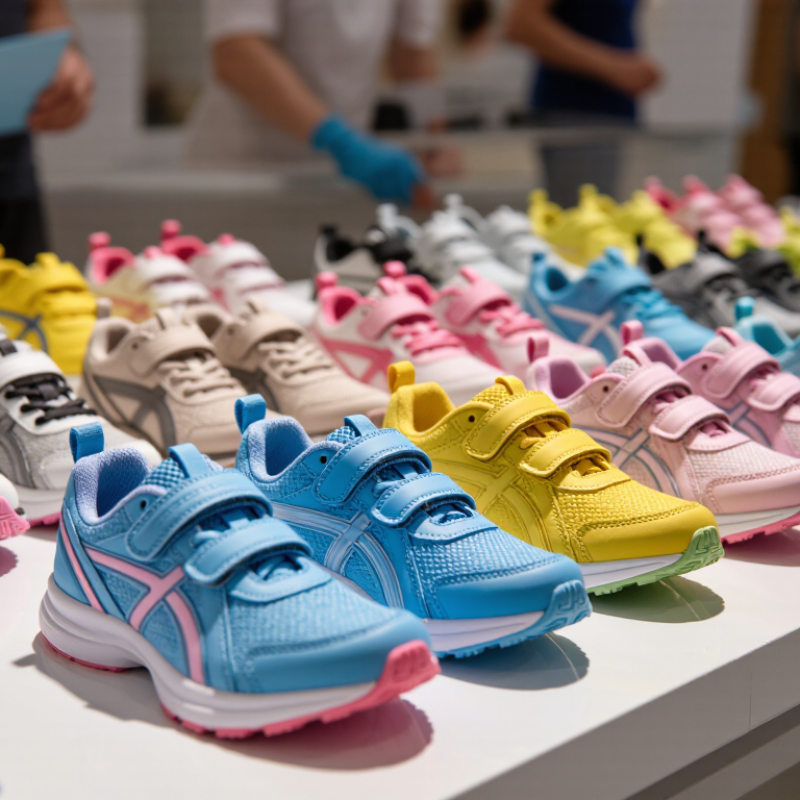
Understanding China’s Toddler Tennis Shoe Industry
China’s toddler tennis shoe industry includes factories, material suppliers, and trading companies with different production strengths. Some facilities focus on small-batch development, while others are better suited to larger orders. For buyers, the distinction matters. A supplier’s sample may look tidy, yet repeated production can reveal differences in stitching, sizing, or sole flexibility.
Toddler shoes need more than a sporty appearance. A roomy toe area, a secure heel, and a flexible outsole can support comfortable everyday movement. Useful checks include measuring several sizes, bending the sole by hand, and inspecting seams around the toe. Ask how suppliers check materials and finished pairs. Clear answers are more helpful than broad promises. Small details count.
Production choices involve trade-offs. Lightweight fabrics may feel airy, but can wear differently from denser materials. Grippy soles are useful on smooth floors, though no shoe prevents every slip. Buyers should review sample pairs and confirm size charts before placing an order. The process can still be imperfect: color and fit may vary slightly between batches. That deserves attention. Independent product testing can add confidence, especially when a shoe will be used daily.
How Toddler Tennis Shoes Are Designed and Manufactured
Designing toddler tennis shoes starts with movement, not decoration.
A child’s first steps can include short runs, sudden turns, and frequent stops. So designers usually prioritize low weight, a flexible forefoot, a roomy toe area, and secure closures. These features must be checked on multiple foot shapes; one sample size cannot represent every toddler. A soft upper may look comfortable but still crease or rub after repeated wear. Prototypes reveal such flaws. Sometimes late.
Manufacturing typically moves through pattern grading, material cutting, stitching, lasting, and outsole bonding. Quality teams inspect seams, adhesion, sizing, and bending performance, then review fit on physical samples.
The APICCAPS World Footwear Yearbook 2023 estimated global production at 23.9 billion pairs in 2022, showing the scale of the supply chain behind everyday footwear. Its 2024 edition reported 22.4 billion pairs for 2023, a reminder that output can shift year to year. These are all-footwear figures, not toddler-shoe counts.
For buyers comparing manufacturers and suppliers in China, useful questions include how each factory checks size consistency, tests sole bonding, and records defects across production batches. A neat-looking sample is not enough. Real wear matters.
Materials, Safety Features, and Quality Standards
Materials, Safety Features, and Quality Standards
When evaluating toddler tennis shoes, start with materials that feel soft but hold their shape. Breathable mesh can help reduce heat during active play, while smooth linings may limit rubbing around the heel. Check the toe box for room to wiggle, not so much space that the foot slides forward. A flexible sole should bend near the ball of the foot. The outsole also needs dependable grip on common indoor and outdoor surfaces. Small details matter.
Safety depends on more than appearance. Look for secure fastenings that stay closed during play, rounded edges, and seams that do not press against the skin. Suppliers should be able to share clear material information and relevant test reports. Ask what tests cover, rather than relying on broad claims such as “safe” or “non-toxic.” Requirements can vary by market. A tidy finish helps, but it cannot replace documented checks. I would still inspect a sample in person; photos miss stiff edges.
Tips: Press the sole, inspect the stitching, and check that fasteners hold firmly. Compare the size with the child’s foot while standing, since feet can spread under weight. Replace shoes when the sole wears smooth or the fit becomes tight. Even careful checks are not perfect. A shoe that looks sturdy may feel different after a full day of play.
Types of Chinese Manufacturers and Suppliers
China’s toddler tennis shoe suppliers generally fall into three groups: direct manufacturers, OEM/ODM producers, and trading companies. Direct manufacturers operate their own workshops and may offer closer control over cutting, stitching, sole attachment, and final inspection. OEM/ODM producers can develop designs or adjust existing styles, such as changing the upper fabric, closure, or outsole pattern. Their capabilities vary, so a polished catalogue alone is not proof of production quality.
Trading companies source shoes from one or more factories. They can simplify communication and combine different products in one order, which may help smaller buyers. However, factory access and quality oversight can be less direct. Some suppliers combine manufacturing and trading roles. The labels overlap; ask who makes each sample and where bulk orders are produced. A sample should be checked for flexible soles, smooth seams, secure closures, and sizing consistency. Small details matter. One fitting may not reveal every issue.
Tips: Request a size chart with foot-length measurements, not just age ranges. Ask for recent production photos and written inspection criteria. Compare a pre-production sample with finished pairs, especially around heel fit and toe space. Keep questions specific. Supplier documents are useful, but they do not replace checking the actual shoes; even a careful review can miss a poor-fitting size.
How to Evaluate and Source a Reliable Supplier
When evaluating China toddler tennis shoes manufacturers and suppliers, look beyond catalog photos. Ask how they check fit across toddler sizes, since a shoe that looks roomy may still press against the toes. Request a sample in the exact materials and construction you plan to order. Check the toe box, heel hold, flexible sole, stitching, and any rough edges by hand. Small details matter. Ask for proof. Review written quality procedures, material specifications, and recent inspection records, then confirm which checks apply to your order. A polished factory presentation is useful, but it does not replace evidence.
Discuss production capacity, minimum order quantities, lead times, and how defects are handled before paying for samples or production. Ask the supplier to explain how it keeps color, sizing, and sole flexibility consistent between batches. Clear answers should match the documents and sample you receive. Compare quoted prices carefully; an unusually low quote may leave out packaging, testing, or inspection costs. Communication is part of reliability, too. Notice whether responses are specific and whether changes are recorded in writing. One limitation: samples cannot prove every production run will match. A written agreement helps, but follow-up checks may still be needed. Be candid about your own requirements, including target market, size range, packaging, and acceptable tolerances. A checklist can miss things. Recheck the sample after a child walks in it briefly, and record any pressure marks, slipping, or loose stitching before approving production.

