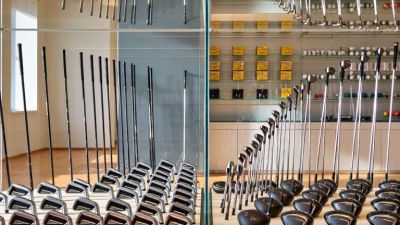
For global buyers, the ten strongest golf club manufacturers should be compared by range, technology, and market position. The R&A’s Golf Around the World 2023 report counted about 66.6 million golfers across 206 countries. That scale rewards manufacturers offering complete families, including drivers, irons, wedges, putters, junior clubs, and left-handed options. A broad catalogue matters when climate, skill level, and local fitting services vary.
Technology separates a useful product from an expensive experiment. Independent launch-monitor testing should examine ball speed, launch angle, spin, dispersion, and forgiveness. Adjustable hosels help players tune flight, while high-MOI heads can protect distance on off-centre strikes. However, more settings do not guarantee better performance. Golf Datatech’s equipment-tracking reports consistently show strong demand for replacement clubs, but sales data cannot prove which design suits every swing. That is an important limitation.
Brand positioning also changes the buying decision. Some manufacturers focus on tour-inspired precision; others prioritise easy launch, value, or custom fitting. The National Golf Foundation reported approximately 28.1 million on-course golfers in the United States during 2023, highlighting a large but highly varied customer base. In practice, I would compare stock shaft choices, warranty support, fitting networks, and regional availability before judging technology. Marketing claims can look impressive. Real performance may be less dramatic. A careful buyer should test clubs with identical balls, repeat several swings, and accept that personal results may contradict laboratory expectations.