
Top 10 Golden Breadcrumbs Suppliers for Global Buyers
Golden Breadcrumbs may look like a simple ingredient, but global buyers know better. A crisp, even crumb depends on more than appearance. Bread type, particle size, moisture, color, and packaging can all affect performance. A coating that works well on a local fried product may behave differently after a long shipment or in another recipe.
Quality pioneer W. Edwards Deming’s reminder, “Quality is everyone’s responsibility,” offers a useful standard for evaluating suppliers. It is not a Golden Breadcrumbs-specific quote, but it applies to every stage of production and sourcing. Buyers should ask how suppliers manage consistency, document specifications, and respond when a batch misses expectations. Small details matter. A sample that looks golden under bright lighting may cook darker than expected. That deserves a closer check.
This guide introduces ten suppliers for global buyers to investigate, comparing product range, customization, export experience, and practical communication. Availability and suitability can vary by destination and application, so verify current specifications directly with each company. No supplier is perfect. Nor can a ranked list replace a kitchen trial, a careful review of technical documents, or a frank discussion about lead times. Use these profiles as a starting point—not a final verdict—for finding Golden Breadcrumbs that meet your product needs.
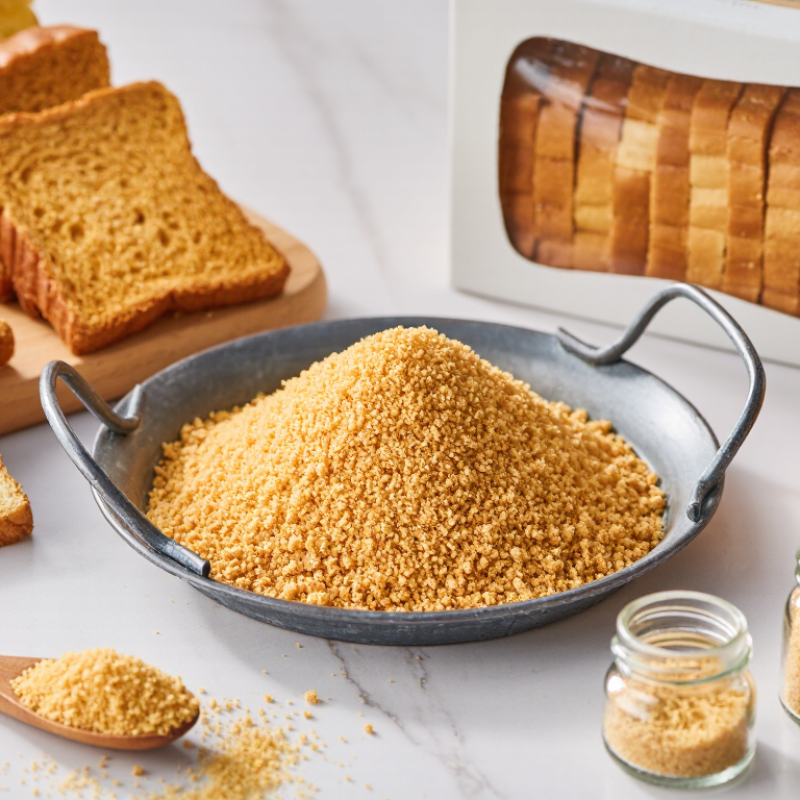
Golden Breadcrumbs: Definition, Ingredients, and Production Methods
Golden breadcrumbs are dried, ground bread particles with a warm yellow-gold color. They add a crisp coating to poultry, seafood, vegetables, and baked toppings. Their shade can come from the bread formula, toasted crust, or coloring ingredients, so “golden” does not describe one fixed recipe. Not just color. Texture matters too: fine crumbs cling evenly, while coarse pieces create a more visible crunch.
A typical formula uses wheat flour, water, yeast, salt, and sometimes sugar or oil. Ingredient choices affect flavor, absorption, and browning. Some producers use turmeric or paprika for color; others rely on baking and toasting. The bread is baked, cooled, dried to reduce moisture, then milled and screened into particle sizes. Small changes in drying time can make crumbs dusty or leave them too soft. That difference shows up in the fryer.
For buyers, useful checks include color consistency, particle-size range, moisture level, and ingredient declaration. Ask whether the crumbs suit direct coating or need an adhesive such as egg wash or batter. Test it directly. A sample on the intended food is more informative than appearance alone. Golden crumbs may darken quickly in hot oil, and coating performance can shift with storage humidity. Even a neat specification sheet cannot replace a practical kitchen trial.
Top 10 Golden Breadcrumbs Suppliers for Global Buyers - Golden Breadcrumbs: Definition, Ingredients, and Production Methods
The entries below describe common supplier and product profiles, not named companies or a verified ranking. Formulations, colors, particle sizes, and certifications vary by producer and destination market.
| Profile | Typical product | Common ingredients | Typical production method | Common applications | Buyer checks |
|---|---|---|---|---|---|
| 1. Fine-crumb specialist | Fine, dry golden wheat crumbs | Usually wheat flour, water, yeast, and salt; recipe-dependent additions may include sugar or oil | Bread is baked, dried, milled, and screened to a fine particle size | Even coating for formed foods, fish, poultry, and snack products | Particle-size range, moisture, color consistency, and wheat-allergen controls |
| 2. Medium-crumb producer | Versatile medium-size golden crumbs | Typically baked wheat bread; exact recipe depends on the manufacturer | Dried bread is granulated and sieved to remove oversize and fine fractions | Retail packs, foodservice, and general-purpose coatings | Sieve specification, bulk density, packaging format, and shelf-life data |
| 3. Coarse-crumb producer | Coarse, visibly textured golden crumbs | Bread-based ingredients, commonly wheat flour, yeast, water, and salt | Baked bread is dried and coarsely broken, then screened for a controlled size range | Crisp coatings, casserole toppings, and products where a pronounced crumb texture is desired | Oversize limits, breakage during transport, and coating performance after cooking |
| 4. Panko-style crumb maker | Large, light, flaky crumbs; golden versions may also be offered | Usually wheat-based bread; formulas vary by product and market | Specially baked bread is dried and formed into flakes or coarse particles | Crispy coatings for fried foods and prepared meals | Flake dimensions, frying results, oil uptake, and whether the product is plain or seasoned |
| 5. Seasoned-crumb blender | Golden crumbs blended with herbs or spices | Breadcrumbs plus seasonings; salt, herbs, spices, and other additions depend on the recipe | Dry ingredients are weighed, blended, and packed under controlled conditions | Ready-to-use coatings and recipe mixes | Full ingredient and allergen declarations, seasoning uniformity, and destination-market compliance |
| 6. Reduced-sodium product maker | Plain or seasoned crumbs formulated with a lower declared sodium level | Bread ingredients, with salt adjusted according to the formulation | Bread is baked, dried, milled, and tested against the product's declared nutrition specification | Products requiring control of sodium contribution from the coating | Laboratory nutrition data, claim requirements in the target market, and sensory performance |
| 7. Wholemeal-crumb producer | Golden-brown crumbs made with wholemeal or whole-wheat bread | Whole-wheat flour, water, yeast, and other recipe-dependent ingredients | Wholemeal bread is baked, dried, and milled to the requested grade | Coatings and toppings where a whole-grain ingredient is specified | Whole-grain definition and claim rules in the destination country, fiber data, and color variation |
| 8. Gluten-free crumb specialist | Gluten-free crumbs, which may be made from rice, corn, or other suitable ingredients | The base varies; starches, flours, oils, binders, and seasonings are formulation-dependent | A gluten-free dough or bread base is baked or otherwise processed, dried, and milled with cross-contact controls | Coatings for products requiring gluten-free ingredients | Gluten testing, certification or regulatory documentation, and allergen cross-contact controls |
| 9. Organic-certified crumb processor | Breadcrumbs made with certified organic ingredients where available | Organic flour and other ingredients as stated on the product specification | Bread is baked, dried, milled, and handled according to applicable organic certification requirements | Retail and food manufacturing products requiring organic inputs | Valid certificate, product scope, chain-of-custody records, and import-market recognition |
| 10. Custom-specification contract producer | Made-to-order crumbs with agreed particle size, color, seasoning, or pack format | Specified with the buyer; commonly bread-based, with optional formulation changes | Production parameters are set to an agreed specification, then checked through quality-control testing | Private-label products and industrial recipes with defined coating requirements | Minimum order quantity, sample approval, tolerances, audit documents, and change-control process |
Golden breadcrumbs are generally dried bread crumbs with a golden appearance. The color may come from the bread's baking and crust, the selected ingredients, or permitted coloring ingredients, depending on the product and local regulations. Buyers should confirm the ingredient list, allergen statement, moisture specification, particle-size range, food-safety documentation, and labeling requirements for the importing market.
