China Top Restringing Rackets Machine Suppliers?
Choosing among China’s top Restringing Rackets Machine suppliers requires more than comparing factory prices. A reliable supplier should understand tennis, badminton, and squash servicing conditions. Their machines must provide stable tension, secure mounting, and smooth adjustment during repeated use. Small details matter. A loose clamp can damage strings or distort the racket frame. A noisy motor may also signal weak assembly or poor maintenance.
This guide examines Chinese manufacturers through practical, verifiable factors. These include production experience, material quality, tension accuracy, calibration procedures, spare-parts availability, and technical support. Factory photographs are useful, but they are not enough. Buyers should request test videos, product specifications, inspection records, and clear warranty terms. A dependable supplier should explain whether the machine suits shops, clubs, academies, or professional stringers. It should also provide realistic information about delivery, installation, and operator training.
Some suppliers offer attractive designs but limited after-sales service. That difference can become expensive after a broken clamp or failed control panel. No supplier is perfect. Even experienced manufacturers may have inconsistent communication or delayed component replacement. This guide therefore considers strengths and weaknesses instead of repeating promotional claims. It also encourages buyers to compare actual working performance, not only catalog features. A careful decision begins with questions, sample testing, and direct supplier communication. That approach helps identify a China-based partner capable of delivering dependable restringing equipment for daily professional use.
What Is a Racket Restringing Machine?
China Top Restringing Rackets Machine Suppliers?
What Is a Racket Restringing Machine?
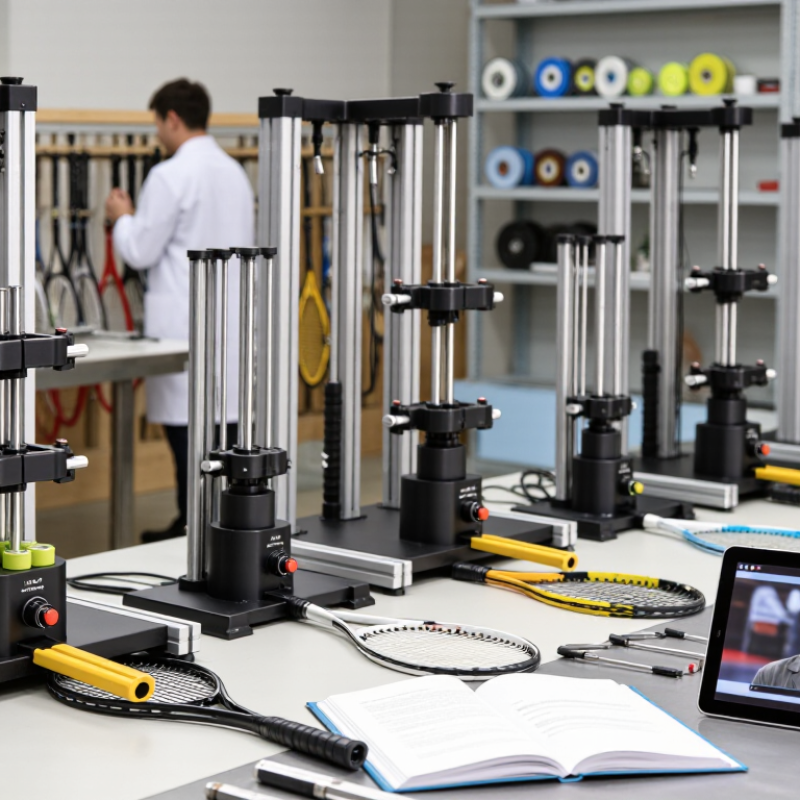
A racket restringing machine replaces worn strings with controlled tension and consistent spacing. It holds the frame firmly while guiding each string through the grommets. Most machines use a tension head, mounting supports, clamps, and a turntable. Together, these parts reduce frame movement during restringing.
There are manual, electronic, and computer-assisted models. Manual machines suit careful technicians who value direct control. Electronic machines improve speed and tension consistency, especially in busy repair rooms. During practical use, I check the clamp grip after several rackets. Loose clamps can cause tension loss and uneven string beds. Small details matter.
When comparing Chinese suppliers, examine frame support, tension accuracy, replacement parts, and operator instructions. Ask for calibration information and test records. A supplier should explain how the machine handles different racket shapes and string materials. Clear answers usually reflect stronger technical knowledge. However, printed specifications are not enough. I would request a sample demonstration and inspect the machine under working pressure.
The ideal tension may differ by player, string, and playing style. A machine cannot replace professional judgment. Even experienced operators sometimes need to correct mounting pressure or adjust clamp positions. That is normal, but it should be documented. A reliable supplier provides responsive service, practical training, and accessible maintenance guidance.
Bruises on the frame should never be accepted as “part of the process.”
How Do Racket Restringing Machines Work?
How Do Racket Restringing Machines Work?
A racket restringing machine applies controlled tension to each string. The operator first mounts the frame on a stable support. Six-point supports usually distribute pressure more evenly and reduce frame distortion. The string then passes through a tension head, which pulls it to the selected kilogram or pound setting. A clamp holds the tension before the next section is installed. Simple in principle.
Modern electronic models use sensors and motors to maintain consistent pulling force. Manual and drop-weight systems rely more heavily on gravity, calibration, and operator technique. The International Tennis Federation’s Global Tennis Report 2021 estimated 87 million tennis players worldwide. That scale increases demand for repeatable restringing services. The SFIA 2024 Topline Participation Report also recorded 23.8 million American tennis participants in 2023, showing why accurate workshop equipment matters.
Practical accuracy depends on more than the machine display. I check clamp slippage, inspect mounting pads, and test tension with a calibrated tool. Humidity, string coating, and frame shape can alter results. The process is not perfectly uniform. A machine may show 25 kilograms, while the string bed settles lower after installation. Research published in the International Tennis Federation’s Technical reports has repeatedly linked string tension with launch angle, control, and comfort. Suppliers should therefore provide calibration guidance, replacement parts, and operator training. Cheap equipment can work, but careless setup can quietly damage performance.
Key Features of Professional Racket Restringing Equipment
China Top Restringing Rackets Machine Suppliers?
Professional racket restringing equipment should control tension, stability, and repeatability. The ITF Global Tennis Report 2021 estimated 87 million tennis players worldwide. That scale increases demand for reliable restringing services. A serious machine needs constant-pull tensioning, fine digital adjustment, and visible calibration data. These features reduce tension variation across repeated jobs.
A rigid six-point mounting system protects the frame during high tension. Self-centering supports also improve setup speed. High-quality clamps should hold thin strings without crushing them. Smooth rotational movement matters when technicians restring several rackets daily. Ergonomics matter too. Adjustable working height, clear controls, and quiet operation reduce fatigue. The machine should include a calibration procedure and accessible replacement parts. A supplier with documented testing, training, and responsive technical support is more dependable than one offering only a low price. My own experience suggests that speed is often overvalued. Accuracy still wins, although perfect consistency is difficult in busy workshops.
Tips: Ask for a calibration certificate before purchase. Test three tension settings with the same string. Compare the machine reading with an independent tension tester. Record results after every service cycle. Check whether clamps leave marks on rough or textured strings. Small details expose weak engineering. The ITF’s equipment guidance also reminds technicians that racket and string behavior can change performance, so machine settings should match the player’s needs, not a fixed formula.
Professional Racket Restringing Equipment: Typical Tension Coverage
A professional restringing machine should provide a stable, accurately calibrated tension range that covers the needs of tennis, badminton, and squash rackets. The ranges shown represent common stringing requirements rather than any specific company or brand.
Values are shown in pounds (lb); actual tension depends on racket specifications, string type, player preference, and manufacturer recommendations.
Leading China-Based Racket Restringing Machine Suppliers
China-based racket restringing machine suppliers serve sports retailers, training centers, and professional workshops. Choosing one requires more than comparing catalog prices. Performance matters. A dependable machine should provide stable tension, smooth pulling, firm clamps, and an accurately marked turntable. Ask suppliers about calibration procedures, tension ranges, power requirements, and noise levels before placing an order.
Experienced suppliers usually explain their production process clearly. They can provide factory photographs, testing records, operation videos, and detailed manuals. A useful evaluation includes checking sample units with badminton and tennis rackets. Watch for uneven string tension, clamp movement, or delayed motor response. These small issues become expensive during daily use. Spare clamps, replacement parts, and remote technical support also deserve attention.
Communication quality often reveals supplier reliability. Clear drawings, honest lead times, and careful packaging reduce avoidable problems. Buyers should request pre-shipment inspection photos and confirm export documents before payment. Factory audits or third-party testing may add cost, but they can protect a larger investment. I have seen buyers focus too heavily on low prices and overlook after-sales training. That choice can create frustration later. Even a well-built machine needs proper setup and regular calibration. No supplier gets every detail right. A thoughtful buyer should record weaknesses, compare responses, and select the supplier that addresses them directly.
How to Select a Reliable Chinese Equipment Supplier
China Top Restringing Rackets Machine Suppliers?
How to Select a Reliable Chinese Equipment Supplier
The ITF Global Tennis Report 2024 estimates over 106 million tennis players worldwide. This growing market increases demand for accurate restringing equipment. A reliable Chinese supplier should show more than attractive pricing. Ask for tension accuracy records, motor specifications, calibration methods, and production photos. Request a live video test using a standard racket and string. The machine should hold tension steadily, even during repeated pulls. Small errors can change string performance and customer satisfaction.
ISO 9001 certification can support process control, but it does not guarantee excellent equipment. Check the certificate scope and verify its validity independently. Request inspection reports from recent production batches. A professional supplier should provide a clear warranty, spare-parts list, user manual, and response times. The ITF also highlights equipment consistency as important to player experience. That makes after-sales support a practical buying factor, not a sales extra. I would still question unusually low quotes. They may exclude calibration, packaging protection, or replacement parts.
Tips: Compare at least three suppliers. Ask for a sample tension test. Record the result at 20, 30, and 40 pounds. Check whether the readings remain stable after repeated use. Review factory videos carefully, but do not treat them as proof. An independent pre-shipment inspection is wiser. Supplier websites can look polished. Evidence matters more.

