Skip to content

China Top Golf Cart Seat Manufacturers and Suppliers

China has become an important sourcing center for Golf Cart Seat manufacturers and suppliers. Its factories serve private owners, golf resorts, rental fleets, dealers, and vehicle customization businesses. However, a low quotation does not always indicate strong value. Seat foam, vinyl thickness, stitching accuracy, and frame compatibility can change the final result.

Golf-cart upholstery specialist Michael R. Allen says, “A seat is not finished when it looks good; it is finished when it stays comfortable after years of use.” This practical view matters during supplier evaluation. A reliable manufacturer should explain foam density, cover materials, UV resistance, drainage design, and mounting dimensions. Samples should be checked on the actual cart model, not only photographed on a factory floor.

Small details matter. Tight seams prevent early splitting. Reinforced corners handle repeated entry and exit. Closed-cell foam can reduce water absorption after rain. Yet, no supplier is perfect. Some factories offer attractive colors but limited replacement support. Others produce durable cushions but communicate poorly about lead times. That gap deserves attention.

This guide examines China’s leading Golf Cart Seat manufacturers and suppliers through product quality, customization ability, production experience, inspection practices, and after-sales reliability. It also considers practical concerns, including shipping protection, sample approval, minimum order quantities, and spare-part availability. Buyers should compare verified evidence rather than polished claims. A comfortable seat may look simple, but its performance depends on materials, workmanship, and consistent quality control.
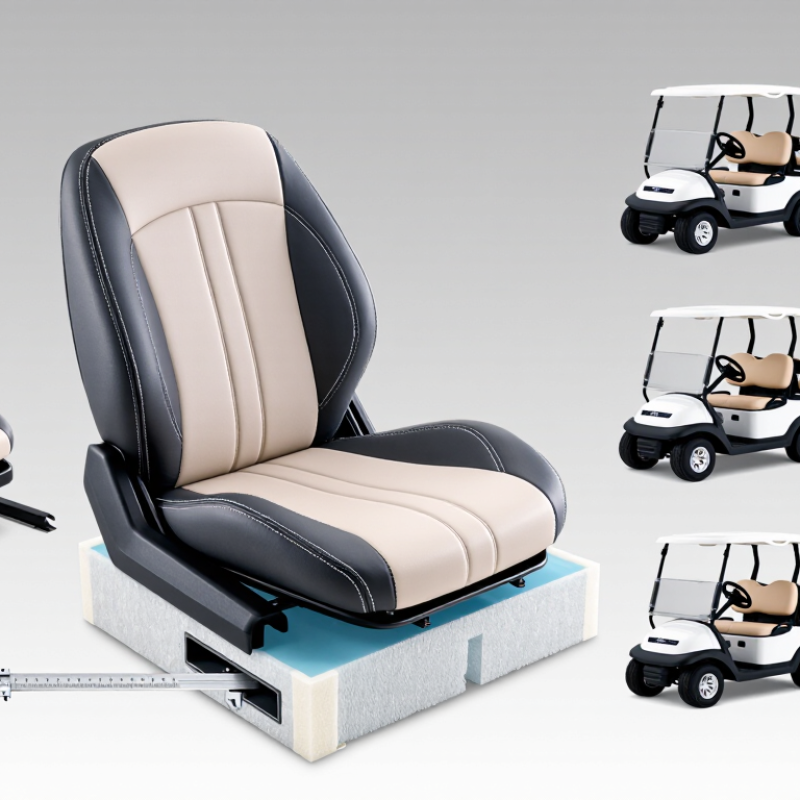
China Top Golf Cart Seat Manufacturers and Suppliers

Golf Cart Seat Manufacturing in China: An Industry Overview

Golf Cart Seat Manufacturing in China: An Industry Overview

China’s golf cart seat industry combines molded foam, synthetic leather, and metal frame production. Many factories support complete manufacturing, from cutting patterns to final stitching and packaging. In practical factory inspections, seat comfort often depends on foam density, not just visible thickness. A thick cushion can still feel weak after repeated use. Frame alignment also matters. Small welding errors may create uneven support or unwanted movement on rough paths. Reliable suppliers usually maintain sample records, material certificates, and inspection points for every production batch. Their experience helps them adjust seat dimensions for different cart models and usage conditions.

Tips: Request a physical sample before bulk production. Press the cushion at several points. Check stitching tension, edge wrapping, mounting holes, and underside protection. Ask how suppliers test water resistance and color stability. Outdoor seats face sunlight, dust, moisture, and frequent cleaning. Basic tests can expose weak materials early.

Cost remains important, but the lowest quotation may hide thinner foam, weaker hardware, or inconsistent sewing. Buyers should compare specifications line by line. A useful supplier communicates clearly about tolerances, packaging, replacement parts, and production schedules. Still, no process is perfect. Even experienced factories may miss a cosmetic flaw during fast production. Independent inspections can reduce this risk. They also create useful feedback for future orders. A dependable partnership grows through documented corrections, not promises alone.

Key Types of Golf Cart Seats and Their Applications

Golf cart seats are not a single product. Their design depends on vehicle use, passenger weight, climate, and maintenance routines. Standard bench seats suit private carts and short campus routes. They provide simple two-person support and preserve rear access. Split-back seats work better when passengers need separate seating angles. In field inspections, rigid cushions often become uncomfortable after long patrols. That detail is easy to miss during purchasing.

Contoured bucket seats offer stronger lateral support on uneven paths. They fit resort transport, security patrols, and hilly property maintenance. Flip-flop rear seats add carrying space for tools, bags, or light equipment. They are useful for grounds crews and rental fleets. Forward-facing rear seats improve passenger visibility and reduce awkward boarding. However, they need careful frame alignment and secure mounting. Fit matters. A loose hinge can create noise, movement, and premature wear.

Seat materials also shape performance. Marine-grade vinyl resists moisture, while UV-resistant coatings help limit fading. Closed-cell foam absorbs less water than ordinary cushion foam. Powder-coated steel or aluminum frames can improve durability in humid areas. Suppliers should confirm mounting points, seat width, backrest height, and load ratings before production. Weather changes everything. I would not choose a stylish seat without checking drainage and stitching quality. Even experienced buyers sometimes overlook foam recovery after repeated daily use. A practical inspection should include seam tension, cushion rebound, hardware corrosion, and compatibility with the cart’s existing body structure.

How to Evaluate Chinese Golf Cart Seat Manufacturers

When evaluating Chinese golf cart seat manufacturers, start with production evidence, not attractive catalog images. Ask for factory videos, material specifications, and recent inspection records. Visit the facility when possible. Better still, bring a local inspector. Observe foam cutting, stitching, molding, and final fitting. Clean work areas matter, but organized production alone does not prove consistent quality.

Seat durability depends on more than appearance. Request samples with the same vinyl, foam density, stitching pattern, and mounting structure used in regular orders. Test them for water exposure, sunlight, repeated sitting, and temperature changes. Do not judge softness alone. A comfortable seat can sag quickly under daily use. Check seam strength and edge finishing closely. One overlooked detail is the underside, where weak staples or uneven brackets may create installation problems.

Supplier reliability requires clear communication and documented controls. Compare lead times, minimum order quantities, packaging methods, and defect-handling procedures. Ask whether each batch receives dimensional and visual checks before shipment. Confirm replacement-part availability and response times in writing. Some evaluations go wrong because buyers trust promises too early. I would ask difficult questions before negotiating price. An honest manufacturer should explain material limits, production risks, and realistic delivery dates. That answer may reveal more than a polished showroom. Also review technical documents carefully, because vague specifications can cause expensive misunderstandings later.

China Top Golf Cart Seat Manufacturers and Suppliers - How to Evaluate Chinese Golf Cart Seat Manufacturers
Evaluation Dimension What to Check Practical Benchmark or Requirement Verification Evidence Suggested Weight
Product Compatibility Confirm that the seat fits the specified golf cart model, body style, mounting points, and rear-seat configuration. The supplier should provide a dimensioned drawing, mounting-hole locations, seat-back angle, and a clear list of compatible vehicle configurations. 2D or 3D drawings, installation photos, physical sample, and a signed compatibility checklist. 15%
Dimensional Accuracy Review seat length, width, thickness, mounting-hole spacing, edge radius, and tolerance control. Critical dimensions should be measured against an approved drawing; tolerance limits must be agreed before production rather than assumed. Inspection report, calibrated measuring equipment, approved sample, and first-article inspection record. 12%
Foam Performance Assess foam density, firmness, resilience, compression behavior, and resistance to permanent deformation. The supplier should specify foam type, nominal density, hardness or firmness range, and test method. The target should be confirmed using production samples. Material specification, batch test results, sample comparison, and compression-set or durability test data where applicable. 12%
Cover Material and Weather Resistance Check resistance to sunlight, rain, humidity, temperature changes, abrasion, cracking, and color transfer. Outdoor seating should use a material specified for exterior exposure, with sealed seams and a surface that can be cleaned with mild soap and water. Material technical data sheet, accelerated weathering results when available, seam photographs, and sample exposure testing. 12%
Stitching and Workmanship Inspect stitch consistency, thread tension, seam alignment, piping, corner shaping, wrinkles, exposed edges, and surface defects. Stitches should be uniform, seams should remain closed under normal use, and upholstery should be tight without excessive wrinkles or visible damage. Golden sample, workmanship standard, pre-shipment inspection photographs, and defect classification sheet. 10%
Structural Strength and Safety Evaluate the base, brackets, hinges, fasteners, grab handles, and seat-back support under repeated loading. Load capacity, test direction, test duration, and acceptance criteria should be defined for the complete seat assembly, not only for individual parts. Load-test report, structural drawings, fastener specifications, and inspection of welds or molded components. 12%
Quality Management Review incoming-material control, in-process inspection, final inspection, traceability, corrective action, and document control. A documented quality system should identify inspection points from raw material receipt through packaging and shipment. Quality manual, process flow chart, inspection plan, nonconformance records, and audit results. Any certification should be independently verified. 10%
Material and Regulatory Documentation Confirm the composition and compliance status of foam, vinyl or fabric, plastic, metal, coatings, adhesives, and packaging materials. Documentation should match the actual production materials and destination-market requirements, including restricted-substance requirements where applicable. Declarations of conformity, laboratory reports, safety data sheets, material declarations, and current test dates. 8%
Sampling and Production Control Determine whether the supplier can reproduce the approved sample consistently across batches. No production change should be made to foam, cover material, color, stitching, hardware, or adhesive without written approval. Pre-production sample, approved limit samples, change-control procedure, batch records, and retained production samples. 7%
Packaging and Shipment Protection Check protection against compression, moisture, abrasion, contamination, and deformation during storage and transport. Packaging should prevent permanent foam deformation and surface damage while keeping the packed size and shipping method practical. Packaging specification, carton markings, drop or handling test results where required, and photographs of packed goods. 5%
Capacity and Lead-Time Reliability Assess tooling, staffing, production capacity, raw-material availability, and ability to meet forecast demand. The supplier should provide realistic sample, production, and replenishment lead times supported by a capacity plan. Capacity statement, production schedule, historical on-time delivery data, and a written lead-time commitment. 4%
After-Sales Support and Warranty Review response time, spare-part support, complaint handling, warranty scope, and responsibility for confirmed defects. Warranty terms should define the coverage period, exclusions, claim evidence, response time, and corrective-action process. Written warranty policy, service procedure, complaint log template, and named technical contact role. 3%
Recommended evaluation method: Score each dimension from 1 to 5, multiply the score by the suggested weight, and compare suppliers only after confirming the same specification, sample, testing method, packaging requirement, and delivery terms. A low price should not compensate for incompatibility, weak weather resistance, poor dimensional control, or missing compliance evidence.

Quality Standards, Materials, and Customization Options

China’s leading golf cart seat manufacturers and suppliers usually begin with measurable quality controls. Experienced factories check foam density, seat dimensions, stitching strength, and base alignment. They also inspect every production batch against approved samples. Details matter. A supplier should provide material specifications, inspection records, and traceable batch information. ISO 9001 certification can support reliability, but it does not replace product testing.

Common seat materials include marine-grade vinyl, PVC, polyurethane foam, and molded plastic bases. Marine-grade vinyl resists moisture and sunlight, while PVC can offer a practical, cost-conscious surface. High-density foam helps maintain comfort after repeated use. Stainless steel fasteners can reduce corrosion in humid environments. However, material names alone prove little. Ask about thickness, foam recovery, UV resistance, and tear strength. Testing methods may differ between suppliers.

Customization often covers seat shape, foam firmness, cover color, piping, logos, mounting holes, and rear-seat layouts. Manufacturers can usually produce samples before full-scale orders. This step exposes problems early. A color may look different under warehouse lighting. Stitching can also shift slightly around tight curves. I have found that clear drawings and physical samples prevent many disputes. Yet prototypes are not perfect. Foam may compress differently in mass production, so final inspections remain necessary. Suppliers with practical experience will discuss these risks openly, rather than promising flawless results.

Sourcing, Pricing, and Supplier Selection Considerations

China Top Golf Cart Seat Manufacturers and Suppliers

Sourcing, Pricing, and Supplier Selection Considerations

China’s golf cart seat sector serves golf courses, resorts, campuses, and industrial sites. Grand View Research estimated the global golf cart market at about USD 1.7 billion in 2023. Its report also expects steady growth through 2030. This demand supports wider seat customization, but supplier quality still varies.

Request samples before discussing volume pricing. Inspect foam density, vinyl thickness, stitching, and mounting-hole accuracy. A seat may look excellent in photos, yet feel unstable after installation. Ask for material test reports, production photos, and inspection records. ISO 9001 certification can indicate process control, but it does not replace your own quality checks. Confirm minimum order quantity, tooling charges, lead time, packaging, and replacement terms in writing. Freight can change the real unit price.

Tips: Compare total landed cost, not factory price alone. Ask suppliers to quote the same specifications. Include seat size, foam grade, cover material, color, logo method, carton dimensions, and shipping terms. A simple comparison sheet prevents expensive misunderstandings.

Reports from Grand View Research and Fortune Business Insights show continued expansion in related recreational and electric vehicle markets. Still, forecasts are not purchase guarantees. Seasonal demand, shipping delays, and material-price changes can disrupt budgets. In my experience, the cheapest quotation often hides thinner foam or weaker brackets. That assumption needs testing. Order a small pilot batch, fit every seat to the target cart, and record defects before scaling. Suppliers that answer technical questions clearly are usually safer long-term partners.