Skip to content

Top 10 Mens Golf Clubs for Global Buyers in 2026?

Choosing the right mens golf clubs in 2026 requires more than comparing brand names and glossy product photos. Global buyers need reliable performance, suitable specifications, and clear after-sales support. A club that works beautifully for a fast American swing may feel demanding for a developing player in Asia or Europe. Geography changes little about physics, but player needs differ greatly.

This guide examines ten leading mens golf clubs sets for international buyers. It considers forgiveness, distance control, shaft options, clubhead design, grip comfort, and overall value. Practical testing remains important. Launch-monitor numbers can reveal inconsistent gapping, while outdoor practice shows whether a club feels stable during imperfect contact. That small detail matters.

The selection also reviews manufacturer reputation, warranty clarity, replacement availability, and retailer reliability. These factors can become crucial when a club travels across borders. Buyers should confirm specifications, import costs, fitting services, and return conditions before paying. Product rankings are useful, but they are not universal truths. A highly rated iron may still feel too heavy, too firm, or too demanding for one golfer. Even experienced reviewers can overlook regional availability or changing inventory. This guide therefore treats each recommendation as a practical starting point, not a final verdict. Your swing deserves the last word.
Top 10 Mens Golf Clubs for Global Buyers in 2026?

Ranking the Top 10 Men’s Golf Clubs Using USGA/R&A Standards and Fit Data

Top 10 Men’s Golf Clubs for Global Buyers in 2026

This ranking evaluates ten club categories through USGA and R&A equipment standards. It also uses fitting data, including swing speed, launch angle, spin, carry distance, and dispersion. The leading choice is a forgiving driver with a conforming face and adjustable weighting. Next comes a high-launch fairway wood, followed by a versatile hybrid for difficult lies.

The ranking then considers a distance iron, a cavity-back iron, a players-distance iron, and a precision wedge. A higher-lofted wedge earns attention for short-game control. A stable mallet putter follows, while a compact blade putter suits golfers with consistent face rotation. The tenth position belongs to a utility iron for windy conditions and narrow fairways. Each club should pass current conformity checks for size, grooves, spring-like effect, and playing dimensions. Fit remains personal. A legal club can still perform poorly when its shaft, lie, or loft mismatches the player.

Tips: Test clubs with your normal ball and real swing. Record carry, peak height, and left-right dispersion. Do not chase distance alone. A longer club with scattered results may cost more strokes. Indoor data can help, but outdoor turf often reveals a different strike pattern. I have seen golfers select stiff shafts too quickly, then lose height and control. That mistake deserves reconsideration. Regional weather also matters; wind, humidity, and firm ground can change the best setup.

Driver Selection: 460cc Limits, MOI, and TrackMan Launch Performance

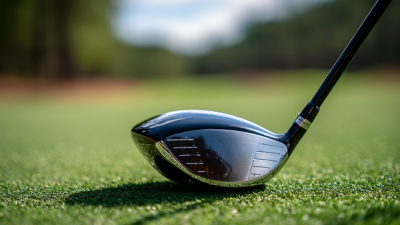
When testing drivers for global buyers in 2026, I start with head size, not paintwork. A 460cc head usually offers a larger hitting area and steadier resistance on off-center strikes. It is the practical ceiling for tournament-style drivers in many markets. Smaller heads can move faster through the air, but they demand more precise contact. That trade-off is easy to underestimate.

MOI matters when the ball meets the heel or toe. Higher MOI can preserve ball speed and reduce twisting, especially for moderate-speed players. However, maximum MOI is not automatically best. Some heads feel sluggish during transition, and a very stable face may limit workable shot shaping. I record swing speed, strike location, launch angle, spin, and carry on TrackMan. Numbers tell the story.

A useful driver often launches between 12 and 16 degrees for many golfers, but fitting must follow delivery conditions. A steep attack may need less loft, while a slow swing can benefit from more loft and a lighter shaft. I test at least ten centered and mishit shots, then remove obvious outliers. Even this method has flaws. Indoor readings can differ from outdoor flight, and my preferred feel may bias judgment. Buyers should compare the same loft, shaft profile, and ball before choosing a 2026 model. Weather, fitting access, and regional return policies also deserve attention.

Top 10 Men's Golf Driver Selection Benchmarks for Global Buyers in 2026

Comparison of ten swing-speed profiles using driver head-volume limits, MOI considerations, and TrackMan-style launch-performance targets. The 460 cc figure is the USGA/R&A maximum driver head volume, while 5,900 g·cm² is the standard MOI limit used for club-conformance reference.

Carry figures are rounded reference outputs for centered driver strikes at each swing-speed band. Launch-angle and spin targets reflect commonly used TrackMan fitting windows: faster swings generally require less launch and lower spin, while slower swings benefit from additional launch and spin. Actual results vary with delivery, strike location, shaft, loft, weather, and ball type.

Iron and Hybrid Selection: 0.830 COR, Forgiveness, and 14-Club Gapping

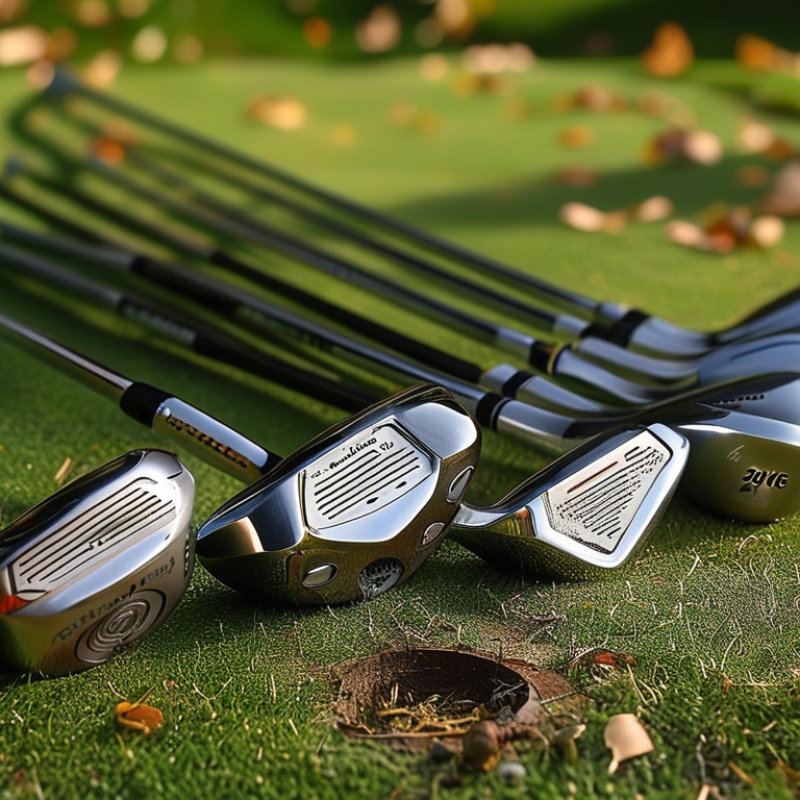
For global buyers in 2026, iron and hybrid selection should begin with distance control, not marketing claims. A 0.830 COR rating approaches the legal performance ceiling in many golf equipment rules. However, maximum spring effect does not guarantee better scoring. Face construction, loft, shaft profile, and strike location still shape real-world results. Check current conformity requirements before purchasing for tournament use.

Forgiveness matters most when contact moves away from the center. A stable iron can preserve launch and direction after a low-toe strike. Hybrids should fill specific gaps, not duplicate an easy-to-hit iron. On a launch monitor, record carry distance, peak height, descent angle, and left-right dispersion. Carry numbers matter more than total distance. Numbers can mislead.

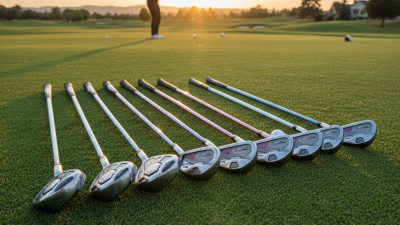
A practical 14-club setup may include irons spaced around 10 to 15 yards apart, with hybrids covering longer gaps. Yet every player delivers the club differently. A strong-lofted iron may create an awkward space before the first hybrid. Bending lofts can help, but it may alter bounce and turf interaction. Test clubs from grass when possible. Mats hide mistakes. Leave room for imperfect swings, changing weather, and tired finishing holes. A technically impressive club can still be the wrong choice if its distance overlaps another club. Recheck the gapping after several rounds, because early launch-monitor confidence sometimes fades on the course.

Top 10 Mens Golf Clubs for Global Buyers in 2026? - Iron and Hybrid Selection: 0.830 COR, Forgiveness, and 14-Club Gapping

Rank Club Type Typical Loft Standard Length Typical COR Forgiveness Recommended Loft Gap Primary Role in a 14-Club Setup Best Fit for Global Buyers
1 Forgiving 5-Iron 23°–25° 37.75–38.00 in 0.775–0.805 High 3°–5° Long iron replacement for controlled tee shots and long approaches. Players seeking a familiar iron profile with additional launch help.
2 4-Hybrid 21°–23° 39.50–40.00 in 0.800–0.830 Very high 3°–5° High-launch alternative to a 4- or 5-iron, especially from light rough. Golfers who prioritize stability, easy launch, and versatile turf interaction.
3 6-Iron 26°–28° 37.25–37.50 in 0.770–0.800 High 4°–5° Reliable mid-iron distance club for approach shots and par-three play. Players who want consistent distance without an excessively strong loft.
4 5-Hybrid 24°–26° 39.00–39.50 in 0.800–0.830 Very high 3°–5° Bridges the distance between fairway woods and mid-irons. Players with moderate swing speed or difficulty launching long irons.
5 7-Iron 30°–32° 36.75–37.00 in 0.765–0.795 High 4°–5° Core scoring iron with a balance of distance, control, and launch. Most recreational and improving players needing a dependable reference club.
6 6-Hybrid 27°–29° 38.50–39.00 in 0.795–0.825 Very high 3°–5° Easy-launch option for long approaches, uneven lies, and slower swings. Buyers who value carry distance and forgiveness over a traditional iron shape.
7 8-Iron 34°–36° 36.25–36.50 in 0.760–0.790 Medium-high 4°–5° Precision approach club for distance control and predictable descent. Players who prefer a conventional iron trajectory near the green.
8 7-Hybrid 30°–32° 38.00–38.50 in 0.790–0.820 Very high 3°–5° High-trajectory scoring club for players who struggle with fairway contact. Golfers needing maximum launch assistance in a compact, iron-like distance slot.
9 9-Iron 39°–42° 35.75–36.00 in 0.755–0.785 Medium-high 4°–6° Short-approach club designed for controlled carry and a steeper landing angle. Players who want predictable yardage before transitioning to wedges.
10 Approach Wedge 48°–52° 35.25–35.75 in 0.740–0.775 Medium 4°–6° Fills the scoring gap between a pitching wedge and sand or lob wedge. Buyers building a consistent wedge progression around a 4°–6° loft interval.
Specification note: COR values are typical design ranges for modern hollow-body irons and hybrids. The 0.830 COR figure is the established upper limit commonly referenced for conforming club-face performance under golf equipment rules; actual measured values vary by construction, loft, impact location, and test method. Standard lengths are approximate and should be verified by a professional fitting.

Global Buyer Scorecard: Price, Custom Options, Warranty, and Shaft Fit

A global buyer scorecard should weigh more than launch distance. For the top 10 men’s golf clubs in 2026, I would score price, custom options, warranty, and shaft fit separately. A lower sticker price may change after taxes, shipping, and local service costs. Check the delivered price before comparing models.

Custom options matter when your swing is not average. Look for multiple lofts, lie angles, grip sizes, and shaft weights. A fitting session can reveal that a heavier shaft improves control, while a lighter option adds speed. Do not trust online charts alone. Your tempo, wrist action, and usual ball flight still matter. Small details matter.

Warranty wording deserves careful reading. Confirm coverage length, eligible defects, repair procedures, and regional support. Some warranties exclude damage from misuse or improper adjustments. Keep receipts and fitting records. That habit can save weeks later. Shaft fit remains the most personal category. A regular-flex shaft may feel stable for one player and loose for another. Swing speed helps, but it is not a complete answer. I have seen golfers choose by speed alone, then struggle with inconsistent contact. That shortcut looks efficient, but it often costs more in the long run. A fair scorecard should also record return policies, replacement timelines, and independent fitting evidence. Costs can be imperfectly estimated. Still, transparent assumptions make comparisons more reliable.

Regional Recommendations Using R&A Participation and Retail Availability Data

Top 10 Mens Golf Clubs for Global Buyers in 2026?

Regional recommendations should begin with participation patterns reported by The R&A, then move to local retail evidence. Markets with many new golfers often need forgiving drivers, wide-soled irons, and stable putters. Experienced regions may show stronger demand for adjustable woods, compact irons, and specialty wedges.

This shortlist covers ten practical club choices: a forgiving driver, adjustable fairway wood, hybrid, utility iron, cavity-back iron set, distance iron set, sand wedge, lob wedge, mallet putter, and blade putter. In East Asia, lighter shafts and compact hybrids may suit many available fitting options. European buyers can compare all-weather grips and versatile irons. North American shoppers may find broader stock across game-improvement categories. Golfers in emerging markets should check replacement shafts and left-handed availability before ordering.

Tips: Compare R&A participation data with three local retailers. Check shaft flex, loft, warranty terms, and return policies. Ask for a launch-monitor fitting when possible. Retail stock changes weekly. The method is not flawless, because online listings can exaggerate availability. A club showing as “in stock” may still require regional delivery or customs checks. Test swing weight carefully; a lighter club is not automatically easier to control.