Skip to content

Top 10 Hybrid Golf Clubs for Wholesale Buyers?

Choosing the right hybrid golf clubs for wholesale can influence inventory turnover, retailer confidence, and player satisfaction. This guide examines ten practical options for commercial buyers, not just popular names.

A hybrid must perform from fairway grass, light rough, and challenging lies. Buyers should compare lofts, shaft flexibility, head design, launch behavior, and forgiveness. A 19-degree model may suit stronger players, while a 25-degree club can help golfers replace a difficult long iron. Small details matter. Grip size, headcover quality, finish durability, and left-handed availability can affect repeat orders.

Wholesale decisions also require commercial discipline. Review minimum order quantities, sample policies, packaging standards, warranty support, and production consistency. Specifications should be verified through current supplier documents and physical samples. Marketing claims can sound impressive, but measurable performance matters more. Ask for launch data, material information, and testing evidence where available.

Player feedback remains valuable. A club that feels excellent in one market may sell slowly in another. Regional handicaps, climate, course conditions, and buyer budgets can change demand. That is easy to overlook.

This overview will compare the Top 10 Hybrid Golf Clubs for Wholesale Buyers? using practical criteria rather than hype. It will consider performance, value, customization potential, supplier reliability, and retail appeal. Some recommendations may require further testing before a large purchase. That is the honest part. No ranking can replace a sample session with real golfers and a careful review of landed costs.
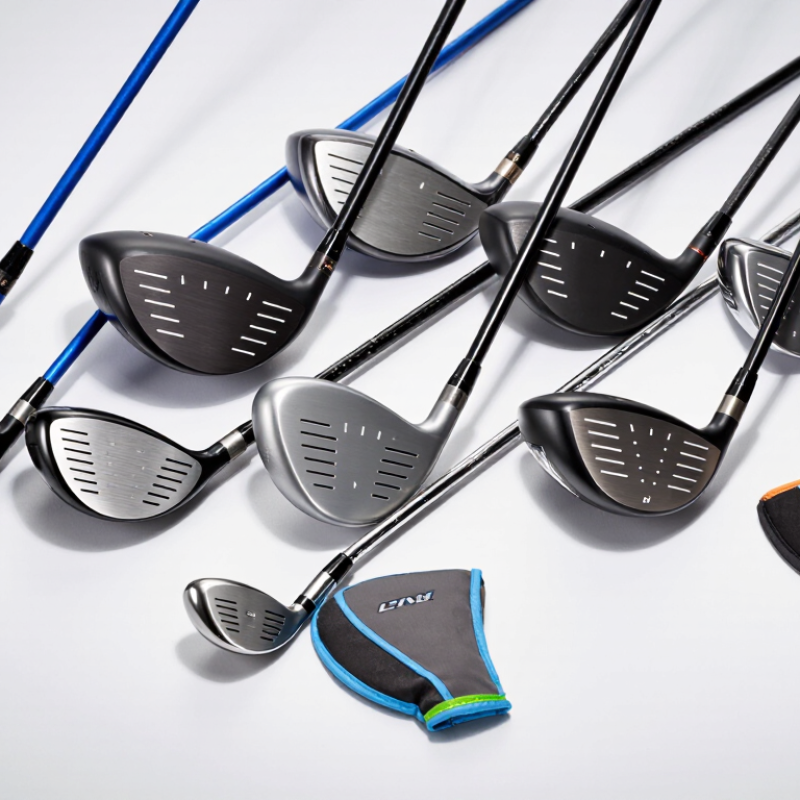
Top 10 Hybrid Golf Clubs for Wholesale Buyers?

What Hybrid Golf Clubs Are and Why Wholesale Buyers Choose Them

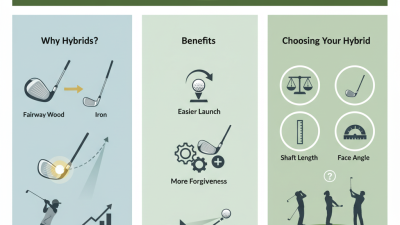
Hybrid golf clubs combine iron-like face geometry with wood-inspired shaping. They usually feature a wider sole, lower center of gravity, and a lighter shaft design. This helps golfers launch shots from rough, fairway, and uneven lies.

The R&A’s Global Golf Participation Report 2023 recorded 66.6 million on-course golfers across 206 countries. The National Golf Foundation also reported 28.1 million U.S. on-course golfers in 2023. These figures indicate broad demand for forgiving, versatile equipment. Wholesale buyers often choose hybrids because one model can serve beginners, seniors, and developing players. A 22-degree hybrid may replace a difficult long iron. It can also fill a clear distance gap between fairway woods and mid-irons.

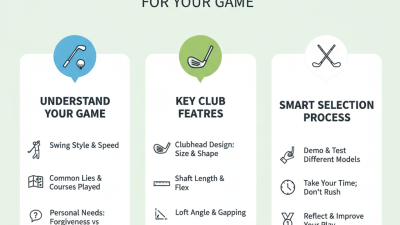
For buyers, product selection should start with measurable details. Check loft spacing, shaft flex, head weight, face height, and sole width. A compact head may suit experienced players, while a deeper head can offer more confidence at address.

Stocking several lofts supports fitting conversations and reduces mismatched purchases. Golf Datatech’s equipment tracking reports regularly show that equipment demand shifts with participation, seasonality, and replacement cycles. That makes inventory planning less predictable than it appears.

A practical test matters.

Wholesale samples should be hit from firm turf and thick rough. Buyers should record carry distance, launch height, and dispersion, not only appearance. Some hybrids look powerful but produce inconsistent contact. That assumption needs testing. Suppliers should provide loft tolerances, shaft specifications, and quality-control records before larger orders.

How to Evaluate Hybrid Clubs by Design, Performance, and Target Golfer

When evaluating hybrid clubs for wholesale, start with design, not finish or packaging. Check loft gaps, face height, sole width, center of gravity, and shaft options. A low center of gravity can help launch slower swings, while a compact head may suit stronger players seeking workability. Verify loft consistency across the range. Small gaps create awkward purchasing decisions.

Performance testing should include launch angle, carry distance, descent angle, and dispersion. Do not rely on one maximum-distance shot. Test from tight fairway lies, light rough, and uneven ground.

The R&A’s Global Golf Participation Report 2023 recorded 66.6 million adult golfers outside the United States and Mexico. That broad market includes beginners, seniors, improving amateurs, and low-handicap players. Their needs are not interchangeable. A beginner may value forgiveness and easy launch, while an experienced golfer may prefer a flatter flight and controllable spin.

Target-golfer evaluation should match product specifications with local demand. The National Golf Foundation reported 28.1 million on-course golfers in the United States during 2023. That figure supports wide demand, but it does not guarantee every loft will sell. Review regional handicap data, fitting feedback, and replacement patterns before placing large orders. A clean chart can still mislead. I would test at least two swing speeds and record poor strikes, not only perfect contact. Wholesale buyers should also confirm conformity under the current Rules of Golf, including club-count and equipment requirements. Performance claims need evidence. Sometimes, the most attractive hybrid is simply too specialized.

Key Specifications to Compare Across the Top 10 Hybrid Golf Clubs

For wholesale buyers, comparing the top 10 hybrid golf clubs requires more than checking loft and appearance. Loft gaps should usually run in practical steps, such as 19°, 22°, 25°, and 28°. However, actual launch angles vary with center of gravity and shaft design. The 2023 R&A and USGA Distance Insights Report confirms that equipment changes influence distance, but player delivery remains highly important. A 22° hybrid may produce different carry numbers across slower and faster swing groups.

Measure head volume, face height, lie angle, and overall length. A shallow face can inspire confidence from tight fairway lies, while a deeper face may suit buyers seeking higher stability. Check the clubhead’s center of gravity and moment of inertia, not only its visual shape. The USGA Equipment Rules limit conforming clubhead volume to 460 cubic centimeters and regulate club length and performance characteristics. These limits matter during wholesale quality checks.

Shaft weight deserves close attention. A 55-gram shaft may support moderate swing speeds, while heavier options can improve control for stronger players. Compare swing weight, torque, grip size, and available flexes across all ten models. Retailers should also request launch-monitor data, including carry distance, ball speed, launch angle, and dispersion.

Golf Datatech’s equipment retail tracking shows that consumers increasingly compare performance before purchase, yet fit remains inconsistent across stores. That is the uncomfortable part. A specification sheet cannot replace testing. Suppliers should inspect samples, repeat measurements, and document tolerance differences before placing large orders.

How Wholesale Buyers Can Assess Quality, Pricing, and Supplier Reliability

For a top-ten wholesale shortlist of hybrid golf clubs, quality should be tested, not guessed. Request samples with identical lofts, then measure face consistency, shaft alignment, grip security, and head-cover fit. A dependable club feels balanced during a controlled swing. Small manufacturing differences can become obvious after repeated use.

Ask suppliers for material specifications, tolerances, production photographs, and inspection records. Check whether the clubhead returns squarely after impact. Examine the sole for smooth edges and stable turf interaction. Pricing should include tooling, packaging, shipping, replacement units, and possible inspection fees. The cheapest quotation is rarely the complete cost.

Supplier reliability needs evidence. Review response times, sample accuracy, lead-time history, and their process for handling defective batches. Request a written production schedule and a pre-shipment inspection option. Verify whether they can maintain the same swing weight across larger orders. A useful test is a small trial order. It exposes weak packaging and inconsistent assembly early. However, one trial cannot prove everything. I once treated a perfect sample as proof of stable mass production; that judgment was too optimistic. Buyers should compare at least three suppliers, record every measurement, and keep approval samples for future claims. A clear defect policy protects both sides. Reliability is built through repeated, documented performance.

Top 10 Hybrid Golf Clubs for Wholesale Buyers? — How Wholesale Buyers Can Assess Quality, Pricing, and Supplier Reliability
Rank Anonymous Product Profile Typical Loft Standard Length Head Construction Face Material Shaft Options Indicative FOB Price / Unit Typical MOQ Production Lead Time Quality Indicators Supplier Reliability Score
1 Adjustable Forgiving Hybrid 19°–25° 40.25–40.75 in Stainless-steel body with low-back CG and adjustable hosel High-strength maraging steel Graphite senior, regular, stiff; steel optional US$42–58 100 units 35–45 days Loft/lie verification, face-thickness inspection, torque test, 100% cosmetic check 94/100
2 Tour-Shape Utility Hybrid 18°–22° 40.00–40.50 in Compact stainless-steel head with neutral weighting 17-4 stainless steel Graphite stiff and extra-stiff; steel optional US$38–52 100 units 30–40 days Consistent face angle, hosel concentricity, weld inspection, swing-weight matching 92/100
3 High-Launch Women’s Hybrid 22°–28° 38.75–39.75 in Lightweight stainless-steel head with deep perimeter weighting 17-4 stainless steel Light graphite ladies and senior flex US$29–43 80 units 25–35 days Verified total weight, shaft alignment, grip security, loft/lie tolerance within ±1° 90/100
4 Distance-Focused Cup-Face Hybrid 19°–24° 40.25–41.00 in Hollow stainless-steel body with internal perimeter weighting High-strength steel cup face Graphite regular and stiff US$45–65 150 units 40–55 days Face rebound consistency, CT/characteristic-time documentation where required, durability testing 89/100
5 Value-Oriented Rescue Hybrid 21°–27° 39.50–40.25 in Cast stainless-steel head with fixed sole weighting 431 stainless steel Graphite regular, senior, and ladies US$22–34 50 units 20–30 days Random sampling for loft/lie, ferrule fit, paint adhesion, grip and shaft pull test 87/100
6 Adjustable Draw-Bias Hybrid 20°–26° 39.75–40.50 in Stainless-steel head with rear tungsten weight and adjustable hosel High-strength stainless steel Graphite senior, regular, and stiff US$40–57 100 units 35–50 days Hosel torque testing, weight-port security, lie-angle verification, assembly consistency 86/100
7 Women’s Lightweight Utility Hybrid 24°–30° 38.25–39.50 in Lightweight cast stainless-steel head with wide sole 431 stainless steel Light graphite ladies and senior flex US$25–38 60 units 25–35 days Total-weight matching, shaft balance-point check, sole-finish durability, grip-size consistency 85/100
8 Low-Profile Fairway-Style Hybrid 18°–23° 40.50–41.25 in Low-profile stainless-steel head with shallow face 17-4 stainless steel Graphite regular and stiff US$31–46 100 units 30–45 days Sole-flatness check, face-angle consistency, shaft insertion depth, swing-weight sampling 84/100
9 Wide-Sole High-MOI Hybrid 22°–28° 39.25–40.00 in Wide-sole stainless-steel head with deep rear weighting 431 stainless steel Graphite senior, regular, and ladies US$27–41 80 units 25–40 days MOI consistency, bounce-angle verification, paint adhesion, hosel and shaft pull testing 82/100
10 Custom-Length Junior Hybrid 24°–30° 34.00–38.00 in Lightweight stainless-steel head with flexible shaft profile 431 stainless steel Junior graphite in multiple flex and length options US$18–30 50 units 20–35 days Length and total-weight control, shaft-flex confirmation, grip installation, edge-radius inspection 80/100

Wholesale benchmark guide: FOB prices, MOQs, and lead times are indicative ranges commonly used for private-label golf-club sourcing and vary by materials, customization, packaging, testing, order volume, and destination. Reliability scores are a buyer-assessment framework based on quality control, specification consistency, production capacity, documentation, and after-sales responsiveness.

How to Select the Best Hybrid Golf Clubs for Different Market Segments

Selecting the best hybrid golf clubs for wholesale buyers requires market segmentation, not a simple top-10 ranking. The R&A’s Global Golf Participation Report 2023 recorded 66.6 million golfers worldwide. That broad audience includes beginners, senior players, club competitors, and occasional recreational users. Each group needs a different shaft profile, loft range, and price position.

For beginners, choose forgiving hybrids with wider soles, higher launch, and clear alignment features. Senior markets often respond better to lightweight graphite shafts and moderate swing weights.

Competitive players may prefer compact heads, adjustable lofts, and stronger face control. The National Golf Foundation reported 28.1 million on-course golfers in the United States during 2023. This supports a wide but carefully divided product mix.

Field fitting shows that distance claims can mislead. A longer club is not always easier to control.

Tips: Build a balanced ten-model sample. Include multiple lofts, shaft weights, and head shapes. Test each model with three swing speeds. Record launch angle, carry distance, dispersion, and customer comments. These details are more useful than packaging promises.

Wholesale buyers should also compare return rates and demo feedback by region. Humid coastal markets may favor different grip materials than dry inland markets. Small details matter. Pricing deserves a second review, because an inexpensive club may create higher returns when fitting support is weak.