How to Choose the Best Golf Bags for Men?
Choosing the best golf bags for men starts with understanding how you actually play. A walking golfer needs a lighter carry bag, while a regular cart user may prefer stronger dividers and extra storage. The right choice should match your course habits, club setup, weather conditions, and physical comfort. Weight matters. A bag that feels manageable in a shop may become tiring after eighteen holes. Straps, handles, pockets, and base stability deserve close attention.
This guide examines golf bags for men through practical details rather than attractive photos alone. It considers materials, club organization, waterproof protection, cooler pockets, stand mechanisms, and long-term durability. Manufacturer specifications, warranty terms, and independent user feedback can reveal important differences between similar models. A reliable bag should protect expensive clubs, keep essentials accessible, and remain steady beside a cart or on uneven ground. Small details matter. For example, a full-length divider can reduce grip crowding, while a soft-lined valuables pocket may protect a phone and rangefinder from scratches.
No single bag suits every golfer. Personal preference still affects the final decision, and even careful testing has limits. I may value lightweight construction more than someone who carries a large rain jacket and multiple accessories. That is worth remembering. By comparing practical performance, comfort, storage, and build quality, this guide aims to make the selection process clearer. The goal is not to chase the most expensive option, but to find a dependable companion for many rounds.
Define Your Carry Style: Walking, Riding, or Mixed-Course Play
How to Choose the Best Golf Bags for Men?
Define Your Carry Style: Walking, Riding, or Mixed-Course Play
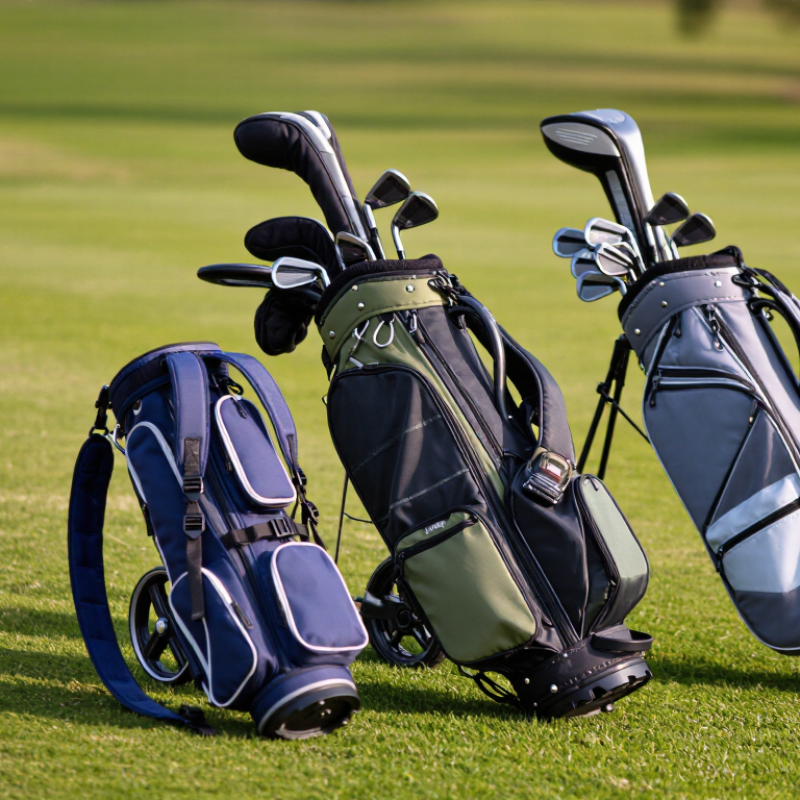
Your carry style should guide your golf bag choice. I learned this after walking eighteen holes with a heavy, poorly balanced bag. The straps dug into my shoulders, and my rhythm suffered by the back nine. For regular walkers, choose a lightweight bag with padded dual straps, a stable stand, and enough pockets for essentials. A comfortable hip panel also helps reduce pressure during long rounds. Avoid choosing the smallest bag automatically. Limited storage can become frustrating when weather changes.
Riding golfers need different features. A cart-friendly base, secure pockets, and accessible club dividers matter more than ultra-light construction. Check whether the bag stays stable when the cart turns or stops suddenly. For mixed-course play, look for a balanced design that remains comfortable while walking but fits a cart securely. A moderate weight often works better than an extreme choice. I once preferred maximum storage, but the extra compartments added weight I rarely used.
Tips:
Count your usual clubs, balls, gloves, rangefinder, and rain gear before shopping. Test the straps with real equipment inside. Walk several minutes if possible. Notice pressure points. Also inspect zipper movement and pocket access. Small details matter. Weather protection is useful, but it may increase weight. Think honestly about your typical course, not your ideal one.
Match Bag Capacity to the USGA’s 14-Club Limit and Gear Needs
How to Choose the Best Golf Bags for Men?
Choosing a golf bag starts with your club count, not its appearance. The USGA permits a maximum of 14 clubs during a round. Your bag can hold more, but carrying extra clubs creates confusion and unnecessary weight. Count your driver, woods, irons, wedges, and putter before shopping. Then include balls, gloves, towels, a rangefinder, and a light rain layer. I once chose a bag with excessive storage, believing more space meant better value. Instead, I carried unused items for several rounds. That experience changed my priorities.
Match the bag’s capacity to your normal equipment. A golfer carrying 14 clubs may prefer full-length dividers and a wider top. These features reduce tangled grips and make club selection quicker. Someone carrying fewer clubs may value a lighter stand bag instead. Check the pocket layout carefully. Separate storage for valuables, clothing, and accessories keeps small items easy to find. Weight distribution also matters, especially on hilly courses. A bag that feels comfortable in a store may feel different after eighteen holes.
Tips: Place your complete gear beside the bag before buying. Remove anything unused for three rounds. Test the straps with the bag fully loaded. Also, leave modest extra room for wet clothing or a cold-weather glove. Overpacking remains an easy mistake.
Compare Carry Weights: 4–6 lb Stand Bags vs. 8–12 lb Cart Bags
Choosing the best golf bag for men starts with how you move around the course. Weight matters before pockets, colors, or club dividers. A 4–6 pound stand bag feels manageable during an 18-hole walking round. Its backpack straps distribute pressure across both shoulders, while the legs keep clubs accessible between shots.
I have carried a lightweight stand bag through damp fairways and uneven paths. The difference became noticeable after the 12th hole. My shoulders stayed fresher, but the smaller base shifted slightly on steep ground. A stand bag usually suits walkers who carry fewer accessories. Check the strap padding, hip balance, and leg stability before buying. Small details matter.
Cart bags typically weigh 8–12 pounds before adding clubs, balls, towels, and water. That extra weight is rarely important on a powered cart, but it becomes tiring when lifting the bag into a car. Cart bags often provide wider club openings and more storage for rainwear, gloves, snacks, and rangefinders. Their bases also fit cart restraints more securely.
Be realistic about your routine. Carrying a 10-pound cart bag for nine holes may sound harmless, but hills change the calculation. I once underestimated that weight and regretted it by the back nine. Conversely, a compact stand bag can feel cramped when you carry wet clothing and extra gear. Measure your normal load, not the empty bag alone.
How to Choose the Best Golf Bags for Men? - Compare Carry Weights: 4–6 lb Stand Bags vs. 8–12 lb Cart Bags
Typical specifications vary by construction, materials, storage capacity, and included accessories.
| Comparison Dimension |
Stand Bag
4–6 lb |
Cart Bag
8–12 lb |
| Best suited for |
Walking rounds, practice sessions, and courses where carrying is practical |
Riding-cart rounds, push-cart use, and golfers who carry a larger equipment load |
| Typical empty weight |
Approximately 4–6 lb (1.8–2.7 kg) |
Approximately 8–12 lb (3.6–5.4 kg) |
| Carry comfort |
Usually includes a dual-strap system that distributes weight across both shoulders |
Usually designed for transport on a cart; carrying is less comfortable over long distances |
| Stand system |
Integrated retractable legs allow the bag to stand on the fairway or practice area |
Generally has no full-length retractable legs; the base is made to sit securely on a cart |
| Club organization |
Commonly has 4–6 club-divider sections, balancing organization with lower weight |
Often has 14-way or multiple-divider layouts for individual club separation |
| Storage capacity |
Moderate storage for balls, tees, gloves, valuables, apparel, and a water bottle |
More generous storage, often including separate apparel, accessory, valuables, and cooler pockets |
| Weather protection |
Usually includes a rain hood, but pocket space and coverage may be more limited |
Often provides more room for rain gear and may include a larger, easier-to-access rain hood |
| Cart compatibility |
Can fit many push carts and riding carts, but the stand legs and base should be secured properly |
Usually offers a stable base, cart strap pass-through, and features that keep pockets accessible while mounted |
| Effect of a full load |
A full set of clubs, balls, water, and clothing can make the total carried weight feel substantial |
The heavier empty weight matters less when the bag remains on a riding cart or push cart |
| Main advantage |
Lower starting weight and better mobility for golfers who walk frequently |
Greater organization, durability, and storage for equipment-heavy rounds |
| Potential drawback |
Less storage and structure; excessive accessories can reduce the comfort advantage |
Higher empty weight and bulk make it less suitable for regular shoulder carrying |
Quick selection guide:
Choose a stand bag if you usually walk and want to minimize carried weight. Choose a cart bag if you normally use a riding cart or push cart and value maximum storage, club organization, and cart stability.
Evaluate Club Dividers, Waterproofing, and Pocket Organization
How to Choose the Best Golf Bags for Men?
A useful bag begins with its club dividers. The USGA Rule 4.1b allows a maximum of 14 clubs, so a 14-way top can prevent shaft crowding. Full-length dividers are better because grips slide independently during a busy round. Check the openings with your largest driver and putter. A narrow putter well may look tidy but become frustrating quickly. The National Golf Foundation reported 531 million U.S. golf rounds in 2023. That volume suggests repeated carrying, loading, and exposure to changing weather. Your bag should survive ordinary neglect. I still overpack mine. That is a mistake.
Waterproofing deserves careful inspection, not just a shiny label. Look for sealed seams, covered zippers, a water-resistant base, and fabric that does not absorb rain immediately. A waterproof pocket protects gloves, scorecards, and a phone, but it may not protect every compartment. Ask whether the claim covers rainfall, immersion, or limited splash resistance. Testing terms are not always presented consistently across the industry. Dry your bag after wet rounds, even if the exterior feels protected. Pocket organization should match your routine. A large apparel pocket handles a folded rain jacket. Smaller pockets should separate tees, pencils, rangefinders, and valuables. The R&A’s Global Golf Participation Report recorded 66.6 million golfers worldwide in 2022, showing how varied playing conditions can be. Test zipper pulls while wearing gloves. Test every pocket standing beside a trolley. Small details matter.
How to Choose the Best Golf Bags for Men?
Evaluating club dividers, waterproofing, and pocket organization
Scores use a practical 1–5 evaluation scale: higher values indicate stronger everyday performance. Stand bags prioritize portability, cart bags provide the most organized storage, and hybrid bags balance carrying comfort with protection. Choose the highest score in the features that matter most to your playing conditions.
Verify Fit, Durability, Warranty, and Value Before Buying
How to Choose the Best Golf Bags for Men?
Verify Fit, Durability, Warranty, and Value Before Buying
Choosing the best golf bag for men starts with fit, not color or pocket count. I learned this after carrying a poorly balanced bag for eighteen holes. Its top leaned outward, and the strap cut into my shoulder. Measure your clubs first. A 9-inch opening should hold your usual set without forcing grips together. Check the stand legs on a flat floor. They should open evenly and remain stable on firm grass. Try the bag with your rainwear, balls, gloves, and valuables inside. A comfortable empty bag can feel awkward when fully loaded.
Durability requires more than thick-looking fabric. Inspect stitched seams, reinforced bases, smooth zippers, and secure strap anchors. Pull each zipper gently. Look for water-resistant materials, but do not assume they are waterproof. A sudden shower can expose weak closures and uncovered pockets. After several rounds, inspect abrasion around the stand hinges and bottom rim. Small fraying may signal larger trouble. Warranty terms also deserve careful reading. Confirm coverage length, repair procedures, proof-of-purchase rules, and exclusions for normal wear. I once trusted a long warranty, then found that its most-used parts were excluded. That mistake changed how I compare bags.
Value means useful performance over the bag’s expected playing life. Divide the price by realistic rounds, not advertised features. A lighter bag may save your back, while a heavier model may protect equipment better. Neither choice is automatically right. Consider your walking habits, storage space, local weather, and access to a cart. Read independent owner reports, but separate repeated faults from isolated complaints. If possible, lift the bag, test every compartment, and simulate a wet round before buying. No checklist replaces personal fit. I still overvalue pocket space sometimes. That is worth remembering.