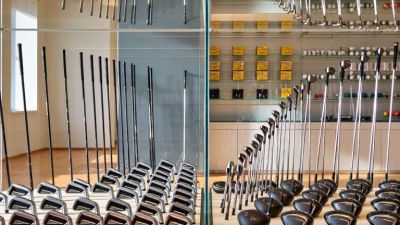
Choosing a golf gear manufacturer is no longer just about comparing prices. Global buyers must weigh materials, production consistency, customization, quality control, and communication. A polished catalog means little if a sample club feels different from the production run.
The R&A’s Global Golf Participation Report 2023 counted 66.6 million on-course golfers across 146 countries. That broad market creates demand for clubs, balls, bags, apparel, and accessories at varied price points. For buyers reviewing China’s leading manufacturers, the figure is a useful signal—not proof that every supplier meets the same standard. Ask for product specifications, sample testing, and clear inspection records.
Club designer Tom Wishon offers a practical fitting principle: “A club should fit the golfer, not the other way around.” It applies to sourcing, too. The right supplier should match a buyer’s target player, order volume, and quality requirements. Small details matter: grip feel, shaft weight, stitching, finish, and packaging can shape a product’s performance and reputation. That is useful, though not the whole story. A manufacturer may excel at bags but lack experience with precision clubheads. Buyers should verify each category rather than rely on a broad factory claim.
This guide introduces ten China-based golf gear manufacturers for global buyers. It aims to make supplier comparisons more concrete, while recognizing that capabilities change. Treat the list as a starting point. Confirm current certifications, production capacity, and sample quality directly before placing an order.

China’s golf gear industry is increasingly connected to a global market shaped by steady demand and product specialization. Grand View Research estimated the worldwide golf equipment market at about US$7.5 billion in 2023 and projected a 5.3% compound annual growth rate from 2024 to 2030. This estimate covers equipment, not the full golf economy, so it should not be mistaken for total industry revenue.
Manufacturers in China contribute through contract production and component supply, including club heads, shafts, grips, bags, and practice accessories. Their strengths often include established metalworking, molding, textile, and assembly capabilities. A club head’s finish, for example, depends on more than appearance: machining tolerances, surface treatment, and consistent weight all affect the finished product. Global buyers still need to check samples, material specifications, and quality-control records. A low unit price alone says little.
The opportunity is real, but not automatic. The market report describes global demand; it does not prove that every factory can meet the same standards or deliver reliably. Buyers should compare production capacity, testing procedures, and communication practices before committing to large orders. Sustainability and traceability also deserve closer attention, though supplier data can be uneven. That gap matters. China’s role is best understood as a broad manufacturing base, with performance varying by product and supplier.
Chinese manufacturers produce a broad range of golf equipment, from club heads and shafts to grips, bags, and training accessories. Some factories focus on metalwood or iron components, while others assemble complete clubs to buyer specifications. Materials can include stainless steel, titanium alloys, graphite, and molded polymers. The right choice depends on weight, flex, finish, and intended player level. Details matter.
Golf bags are another visible category. Suppliers make stand bags with folding legs, cart bags with reinforced bases, and travel covers with padded club protection. Small features, such as zipper quality and strap stitching, can affect daily use more than a polished product photo suggests. Golf balls, gloves, headcovers, and practice mats are also available from specialist producers. Capabilities vary, so buyers should request current specifications, sample units, and clear testing records before comparing offers. A catalog alone is not proof of consistent production. Even well-made samples may not reveal every issue in a larger order, and that deserves honest attention.
The R&A’s Golf Around the World 2023 report counted 66.6 million on-course golfers across 146 countries. That broad market rewards suppliers who can deliver consistent specifications, not just attractive catalogs. These ten profiles describe Chinese manufacturing capabilities; verify each factory’s actual capacity before sourcing.
Profile 1: Clubhead specialists offer cast or forged heads; inspect finish consistency.
Profile 2: Shaft makers supply steel or composite options, with flex tolerances worth checking.
Profile 3: Grip producers mold varied textures and sizes.
Profile 4: Complete-club assemblers coordinate components and packaging.
Details matter.
Profile 5: Golf-ball factories handle core molding and cover production.
Profile 6: Bag makers stitch cart and carry designs; test seams under load.
Profile 7: Trolley suppliers focus on frames, wheels, and folding mechanisms.
Profile 8: Training-aid workshops make mats, nets, and alignment tools.
Profile 9: Accessory suppliers produce headcovers, towels, and gloves, often with flexible order quantities.
Profile 10: Custom-production factories combine several categories, but broad catalogs do not prove in-house capability.
Ask for material specifications, sample measurements, production lead times, and recent inspection records. A polished sample can still hide batch variation.
One overlooked detail: confirm that replacement parts remain available after the first order.
When comparing golf gear manufacturers, judge the sample and the production system, not a polished catalog alone. Ask for material specifications, inspection records, and a recent sample from the same process used for bulk orders. For clubs, measure head weight, loft, lie, and shaft alignment; for bags, inspect seam strength, zipper movement, and loaded stability. Small signs matter. A clean prototype can still differ from shipment quality.
Capacity means repeatable output, not the largest monthly figure in a sales sheet. Request a realistic production schedule, line capacity by product type, and evidence of how the factory handles peak-season orders. Confirm whether key steps, such as molding, finishing, or final inspection, happen in-house or through subcontractors. Ask how defects are recorded and corrected. A spreadsheet helps, but it can hide awkward gaps; visit or arrange a live video walkthrough where practical. Stay specific.
Review certificates for scope, issuing body, validity dates, and the actual facility named. A certificate may cover a management system, not every product or process. Match documents against audit reports and product test results, then verify details with the issuer when needed. Don’t rank suppliers on certificate count alone. I would compare several samples and a small trial order before committing; this takes time, and the trial may not reveal every problem.
Supplier comparison worksheet—not a verified ranking. No supplier-specific evidence was provided, so company names and unverified performance claims are intentionally omitted. Request current documents and confirm details directly before making a sourcing decision.
| Evaluation slot | Product range | Quality evidence to request | Capacity evidence to request | Certification / compliance checks | Current verified status |
|---|---|---|---|---|---|
| Supplier 1 | To be confirmed | Product specifications, inspection records, and sample evaluation | Monthly output, equipment list, and recent production schedule | Request certificate copies; verify issuer, scope, site, and expiry | Not independently verified |
| Supplier 2 | To be confirmed | Material declarations, dimensional checks, and defect-handling procedure | Rated capacity, current utilization, and peak-season lead time | Confirm whether certificates cover the manufacturing location and product scope | Not independently verified |
| Supplier 3 | To be confirmed | Pre-shipment inspection results and corrective-action records | Production-line count, workforce plan, and order-size limits | Check applicable destination-market product and chemical requirements | Not independently verified |
| Supplier 4 | To be confirmed | Incoming-material controls, in-process checks, and final inspection criteria | Capacity by product type, sample lead time, and replenishment lead time | Distinguish management-system certificates from product approvals and audit reports | Not independently verified |
| Supplier 5 | To be confirmed | Approved sample, production consistency checks, and traceability records | Verified output history and contingency plan for production interruptions | Check ISO certificate validity in the issuer’s directory where available | Not independently verified |
| Supplier 6 | To be confirmed | Test methods, calibration records, and warranty/returns data | Monthly capacity by SKU and confirmed minimum order quantities | Verify audit date, audit scope, facility address, and any corrective actions | Not independently verified |
| Supplier 7 | To be confirmed | Product-specific test reports and documented nonconformance process | Machinery and staffing evidence matched to the requested products | Confirm required market-specific declarations or testing with the buyer’s compliance adviser | Not independently verified |
| Supplier 8 | To be confirmed | Quality-control plan, lot records, and inspection sampling criteria | Order-capacity confirmation, lead-time history, and peak-load limits | Treat social-compliance audits as audit evidence, not product certifications | Not independently verified |
| Supplier 9 | To be confirmed | Third-party inspection option, packaging checks, and shipment-release records | Production calendar, subcontracting disclosure, and delivery performance evidence | Ask which processes are in-house and which facilities are included in each audit | Not independently verified |
| Supplier 10 | To be confirmed | Golden sample control, change-management records, and complaint-resolution data | Capacity for repeat orders, tooling availability, and business-continuity arrangements | Verify document authenticity and applicability to the ordered goods and destination market | Not independently verified |
Note: ISO 9001 concerns quality-management systems and does not by itself certify a golf product. Certification and regulatory requirements depend on the product and destination market; verify current requirements and documents before purchase.
China’s top golf gear manufacturers may specialize in very different products, from club components and bags to training accessories. Treat any “top 10” list as a starting point, not a ready-made ranking. Compare factories by product experience, production capacity, material documentation, and their ability to repeat the same specifications across orders. Request samples and inspect details such as stitching, grip texture, clubhead finish, and packaging. A polished sample helps, but it does not guarantee every production unit will match.
Tips: Send a clear specification sheet, target quantities, and logo artwork. Ask about minimum order quantities, sample fees, lead times, and inspection procedures. Keep written approval records. Small details are easy to miss.
Before placing a bulk order, agree on tolerances, defect handling, payment milestones, and delivery terms. Confirm carton dimensions and protective packing; golf gear can be damaged or scratched during transit. Ask the supplier which export documents they provide, then verify destination-market requirements with a qualified customs broker. Compare total landed cost, not just the factory price. A low quote can hide costly packaging or freight assumptions. Supplier communication may also slow during production, so build in time for revisions. Even with careful checks, unexpected delays happen; leave room in the launch schedule.