Skip to content

10 Best Fitness Spin Bikes for Wholesale Buyers?

Choosing the right Fitness Spin Bike for wholesale distribution requires more than comparing prices and glossy product photos. Buyers must examine frame stability, resistance performance, adjustability, noise levels, and long-term maintenance needs. A bike may look impressive in a showroom but develop pedal or belt issues after repeated commercial use. Details matter.

This guide evaluates ten leading spin bikes from a wholesale buyer’s perspective. It considers bulk pricing, minimum order quantities, production consistency, packaging protection, spare-parts availability, and supplier communication. Each model should also be reviewed for user weight limits, console accuracy, transport wheels, and seat adjustment range. These details affect customer satisfaction and return rates.

Real purchasing decisions need evidence. Request factory specifications, test reports, warranty terms, sample units, and clear delivery timelines before placing a large order. Regional safety requirements may differ, so buyers should verify applicable standards independently. A supplier’s confident promises are useful, but documented performance is stronger. That is not enough.

The “best” bike depends on your market. A boutique studio may prioritize smooth resistance and low operating noise. A home-fitness retailer may value compact packaging and attractive pricing. Some recommendations in this list may still require closer inspection, especially when supplier data is incomplete or inconsistent. That uncertainty deserves attention. Wholesale success comes from balancing product quality, customer expectations, landed cost, and dependable after-sales support.
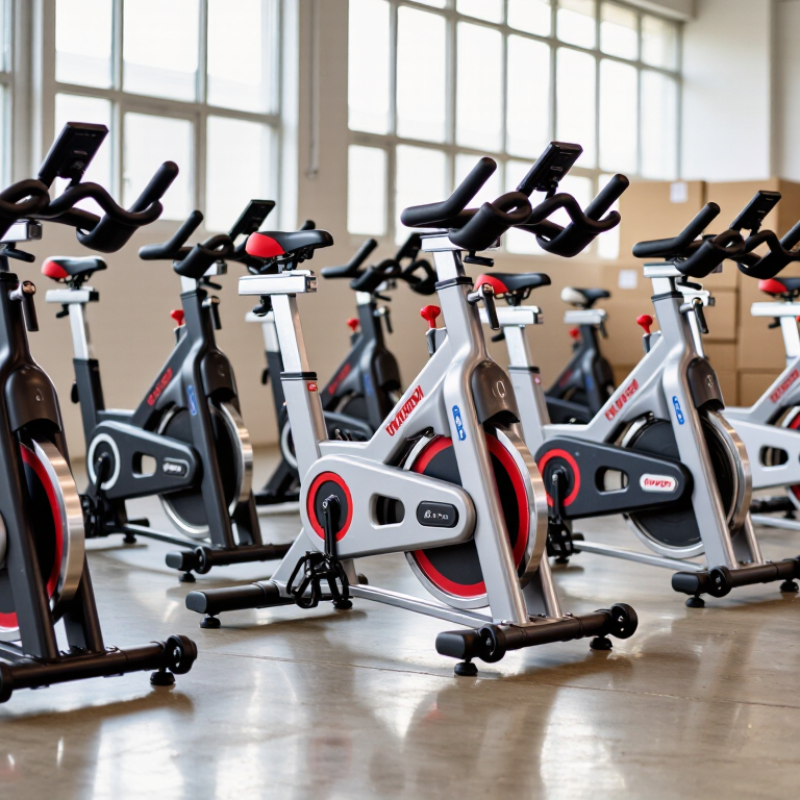
10 Best Fitness Spin Bikes for Wholesale Buyers?

Define Wholesale Selection Criteria Using WHO’s 150–300-Minute Activity Target

For wholesale buyers, the WHO activity target offers a practical starting point: adults should complete 150–300 minutes of moderate activity weekly. A spin bike should support that routine without creating unnecessary discomfort. Buyers can estimate weekly use across homes, gyms, hotels, or rehabilitation spaces. One rider may cycle for 30 minutes, five days weekly. Another may train longer at higher resistance.

Selection should focus on measurable details. Check frame stability during standing climbs, pedal alignment, seat adjustment range, and resistance control. A steel frame may improve durability, but construction quality matters more than weight alone. Look for sealed bearings, replaceable contact parts, clear assembly instructions, and safety features that reduce sudden resistance changes. Quiet operation also matters in apartments and shared facilities. Request sample testing before placing a large order.

Wholesale value is not only the lowest unit price. Ask about quality control records, production consistency, spare-part availability, packaging protection, and after-sales response times. Verify that the console displays useful metrics, such as time, cadence, distance, and heart-rate compatibility. Data can motivate users, although it is not always perfectly accurate. That weakness deserves honest communication.

A simple scoring sheet helps compare suppliers. Still, spreadsheets can hide practical problems. A bike may pass inspection yet feel unstable for taller riders. Test several body sizes and riding positions. The best wholesale choice supports regular use, realistic maintenance, and the full 150–300-minute activity range without promising more than the equipment can deliver.

Verify Commercial Safety Against EN ISO 20957-1 and ASTM F1250 Standards

Wholesale buyers should treat commercial safety as a purchasing filter, not a marketing claim. The 2024 Health & Fitness Association Global Report recorded about 184 million fitness facility members worldwide. High usage increases exposure to loose pedals, unstable frames, and worn adjustment points. A suitable spin bike must survive repeated handling, not only look robust on a showroom floor.

Request testing evidence against EN ISO 20957-1, which addresses general safety requirements for stationary training equipment. Check stability, accessible moving parts, load limits, adjustment locking, warning labels, and user instructions. ASTM F1250 also provides relevant safety criteria for stationary exercise bicycles. Confirm the exact edition and product scope. Do not accept a generic laboratory letter.

Inspect physical samples. Pull the handlebars sideways. Test the saddle clamp under repeated adjustment. Observe whether the emergency resistance control responds quickly. A small gap near the flywheel can become a finger injury risk. It happens.

The European Commission’s Safety Gate reports continue to show mechanical, injury, and labeling hazards across consumer products. That signal matters for procurement teams. Ask for test dates, laboratory accreditation, corrective-action records, and production inspection results. Compare serial-number traceability with the submitted sample. A certificate may describe one excellent unit, while the shipment contains another. I would also review misuse scenarios, including wet floors, rushed adjustments, and users exceeding the stated weight limit. The process is not perfect. That is why independent verification, documented factory controls, and periodic batch testing deserve space in the buying decision.

Compare the 10 Best Spin Bikes by Resistance, Flywheel, Q-Factor, and Power

For wholesale buyers, the ten strongest spin bike options should be compared through measurable details, not showroom appearance. Resistance systems range from felt-pad friction to magnetic and electronic control. Friction models feel direct and cost less, but pads wear and require adjustment. Magnetic systems run quietly, which suits apartments and commercial studios. Electronic resistance offers precise training levels, though repairs can be more complex.

Flywheel weight changes the riding sensation. Lighter wheels, around 8 to 12 kilograms, accelerate quickly and suit interval classes. Heavier wheels, near 15 to 20 kilograms, provide smoother momentum for endurance riders. However, a heavy flywheel does not guarantee better performance. Crank quality and belt alignment matter too.

Check the Q-factor carefully. A narrower measurement, commonly 170 to 190 millimeters, can feel more natural and reduce knee strain. Wider spacing may help larger users, but it can feel awkward during long sessions.

Power measurement separates basic bikes from serious training equipment. Some of the ten options estimate power from resistance and cadence. Others use calibrated sensors at the crank or drivetrain. Sensor-based readings are more useful for coaching and fleet management.

Ask for test data across low, medium, and maximum resistance. I once focused too heavily on flywheel weight and overlooked inconsistent power readings. That mistake changed my purchasing checklist.

Also inspect pedal threads, seat rails, transport wheels, and service access. A bike that looks impressive may still frustrate technicians after fifty units arrive.

Assess Durability Through 100,000-Cycle Testing and Commercial Warranty Terms

For wholesale buyers, a 100,000-cycle test offers useful evidence of spin-bike durability. The test should simulate repeated pedaling, resistance changes, braking, and seat adjustments. Ask how often technicians inspect the frame, crank, belt, bearings, and adjustment rails. A credible report should show test conditions, failure points, repair records, and final measurements. Numbers alone are not enough. A machine may complete the cycles while developing noise or slight frame movement.

Commercial warranty terms deserve equal attention. Check whether coverage includes the frame, flywheel, drive system, electronics, labor, and replacement shipping. Some warranties look generous but exclude parts that receive daily stress. Ask about the response time for defective units and the process for handling repeated failures. Clear terms reduce downtime across a large shipment. Longer is not always stronger.

Request a production sample before placing a bulk order. Measure pedal alignment, listen for bearing noise, and inspect welds around the base. Record resistance consistency after extended use. My own evaluation process has missed small console faults when the mechanical inspection was too rushed. That mistake still matters. Wholesale buyers should also compare warranty claims from previous commercial customers, not only laboratory test certificates. A supplier willing to provide maintenance intervals, spare-part availability, and documented corrective actions usually demonstrates stronger operational reliability.

Rank Wholesale Value by MOQ, 5-Year Total Cost, Service, and ACSM Demand Data

10 Best Fitness Spin Bikes for Wholesale Buyers?

Wholesale value should be measured beyond the invoice price. A practical shortlist of ten spin bikes should compare MOQ, five-year total cost, service support, and demand signals from ACSM. A low MOQ, ideally under 20 units, reduces warehouse risk for smaller dealers. However, a cheaper frame may require more frequent belt, pedal, or console replacement. The model is not perfect.

Use a five-year cost sheet covering purchase price, freight, assembly, preventive maintenance, replacement parts, warranty labor, and expected downtime. Service quality matters when a bike sits unused in a commercial studio. HFA’s 2024 Global Report estimated 184 million health club members across 70 markets in 2023. That scale supports recurring demand, but it does not guarantee demand for every specification.

ACSM’s 2025 Worldwide Survey of Fitness Trends ranked wearable technology first, older-adult fitness third, and exercise for mental health eighth. These findings favor bikes with reliable performance tracking, simple displays, adjustable step-through geometry, and quiet operation. Buyers should rank models by evidence, not showroom appearance. A useful score could assign 30% to five-year cost, 25% to service response, 20% to MOQ flexibility, 15% to durability data, and 10% to ACSM-aligned features. Request failure-rate records and parts availability in writing. Some suppliers will resist. That hesitation deserves a lower score.