Skip to content

10 Wheel Luggage Buying Tips for Global Buyers

For global buyers, choosing Wheel Luggage means balancing durability, maneuverability, capacity, and price. A case may look sturdy in a showroom, yet struggle over uneven paving or crowded terminal floors. One loose wheel changes everything. These practical details matter because luggage travels through busy, complex handling systems. SITA’s 2024 Baggage IT Insights report recorded 6.9 mishandled bags per 1,000 passengers worldwide in 2023, down from 7.6 in 2022. The figures do not predict what will happen to one suitcase, but they underline the value of resilient construction.

A useful buying decision starts with the journey. Frequent flyers may prioritize replaceable spinner wheels, reinforced corners, and a stable telescoping handle. Train travelers might prefer larger wheels that roll across platform gaps and rough sidewalks. Buyers should also compare empty weight, internal compression straps, zipper quality, and repair support in their destination market. Small differences become noticeable when a case is full. Sometimes, the lightest model is not the easiest to manage.

This guide presents ten checks for comparing materials, wheel layouts, tested capacity, security features, warranties, and value across markets. Look closely at product specifications, but treat broad claims such as “unbreakable” with healthy skepticism. I have found that comfort and control are hard to judge from photographs alone. Where possible, roll the case over a hard floor and listen for rattling. A quiet wheel is not proof of quality, either. The goal is a well-informed choice—not a perfect suitcase.
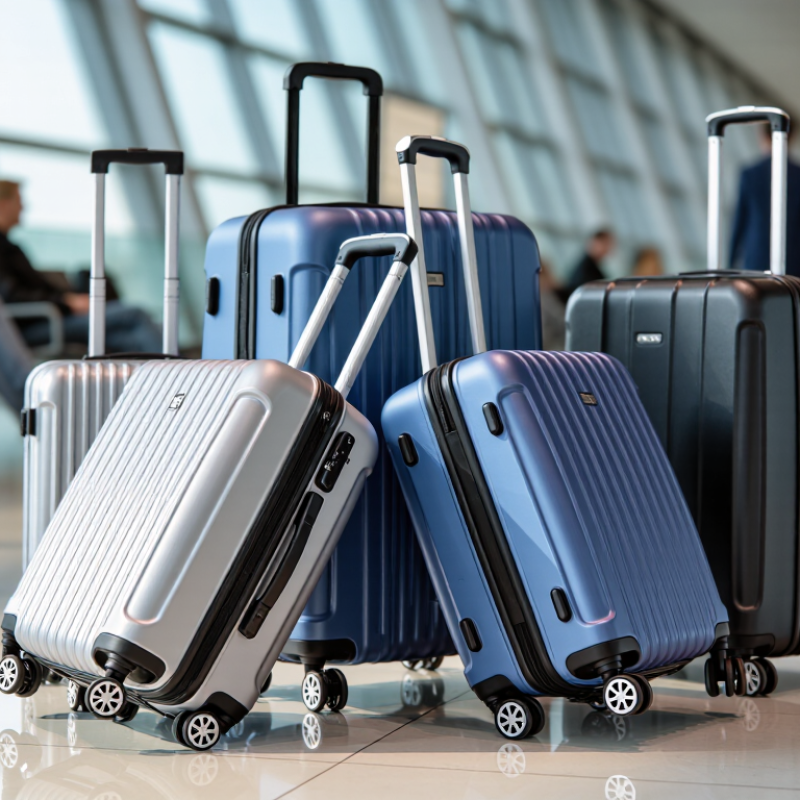
10 Wheel Luggage Buying Tips for Global Buyers

Understanding Travel Needs and Choosing the Right Luggage Type

A suitcase should fit the trip, not just look capable in a shop. A short city break may need a compact carry-on, while a long family visit often calls for more capacity and sturdy handles. Check your usual route: smooth airport floors are very different from station steps, narrow aisles, or uneven pavements. That matters.

Four-wheel spinner cases turn easily in crowded terminals and can roll beside you with little effort. However, they may drift on sloped surfaces, and their wheels can take more impact on rough ground. Two-wheel luggage is often easier to pull across cracked sidewalks or cobblestones, though it needs more room to swing behind you. Try rolling both types with some weight inside. An empty case can feel deceptively easy to steer.

Think about packing habits, too. A structured case can protect folded clothes, while soft-sided luggage may offer useful outer pockets for a jacket or documents. Weigh the case before buying; a heavy shell reduces the space left within airline limits. Those limits vary, so check the current size rules for your likely carriers, including wheels and handles. One assumption worth questioning: bigger is not always better. Extra space can encourage overpacking, and a bulky case is awkward on stairs. Choose a size you can lift comfortably, even when tired.

Comparing Wheel Designs, Materials, and Maneuverability

Wheel design affects more than how a suitcase looks. Four-wheel spinner luggage can turn in a narrow airport queue without being tilted. That helps when one hand holds a ticket or phone. However, wheels mounted outside the case may catch on rough paving or take more knocks during handling. Two-wheel designs often recess their wheels into the shell, offering some protection. They roll well behind you, but require a tilt and can feel less nimble in crowded aisles. Try it loaded. An empty case may glide easily, then pull awkwardly once packed.

Wheel materials shape noise, grip, and wear. Softer polyurethane treads usually roll more quietly over tile, while harder plastic wheels may transmit more vibration through the handle. Check the axle and wheel housing, too; a good tread cannot compensate for a loose mount. Small detail, big difference. A polished showroom floor is a poor final test. If possible, push the case across a seam, turn it sharply, and try a short stretch of rough ground. Notice whether it tracks straight and whether the handle buzzes in your palm. It is easy to overvalue a smooth spin test; real pavement can change the feel completely.

Checking Size, Capacity, Weight, and Airline Requirements

For ten-wheel luggage, check the full exterior size, including wheels, handles, and any expansion section. Measure the case at its widest points rather than relying only on the product listing. Airline limits differ, and some carriers count protruding parts. A case that fits one overhead bin may not fit another. Check the rules for each airline on your itinerary, especially when connecting flights use different carriers.

Capacity is often listed in liters, but that number can be hard to picture. Compare it with luggage you already own, or place a few typical items inside a showroom model. A family’s week of clothing takes more room than a solo traveler’s. Also check the empty weight: a large case can use much of a checked-bag allowance before packing begins. I still find capacity figures less helpful than a real packing test.

Tips: Measure with the wheels attached. Weigh the empty case at home. Check both cabin and checked-baggage limits before departure. Leave room for uncertainty; airline rules and enforcement can change, and an expandable case may exceed the limit when opened. A little annoying, but worth checking.

10 Wheel Luggage Buying Tips for Global Buyers - Checking Size, Capacity, Weight, and Airline Requirements
No. What to Check Practical Guide Why It Matters Buying Tip
1 Carry-on exterior size Many common carry-on guides use dimensions near 56 × 36 × 23 cm (22 × 14 × 9 in), but permitted limits differ by airline and fare. Oversized cabin luggage may need to be checked or may not fit in the overhead bin. Measure the complete bag, including wheels, handles, and any fixed exterior parts. Confirm the limits for every airline on your itinerary.
2 Checked-bag dimensions Some airlines use a 158 cm (62 in) total linear-dimension limit, calculated as length + width + height; this is not a universal allowance. A bag can exceed a size limit even when no single side looks unusually large. Compare the bag’s external dimensions with the airline’s checked-baggage rules, including any size-based fees.
3 Usable capacity Approximate guide: 20–40 L for a compact carry-on, 50–75 L for a medium checked bag, and 75–110 L for a large checked bag. Capacity helps match luggage to trip length, but packing style and bag shape affect how much it holds. Use the stated capacity as a comparison guide, not a guarantee. Check internal measurements and compartment layout where available.
4 Empty weight Typical approximate ranges are 2–3.5 kg for a carry-on and 3.5–6 kg for a medium or large Checked Suitcase. A heavier empty case leaves less of a weight allowance for belongings. Compare empty weights for similar sizes and materials. Check whether the published figure includes detachable accessories.
5 Airline baggage weight allowance Allowances vary by airline, route, cabin, and ticket type. Some checked-baggage policies use 23 kg per bag as a limit, but this is not universal. Being within the size limit does not mean a bag is within its weight allowance. Check the ticket-specific allowance and any per-bag maximum before travel. Leave a margin for souvenirs and scale differences.
6 Wheel design and count Two-wheel designs generally roll tilted; four-wheel spinner designs roll upright and can move in multiple directions. Some cases use additional small wheels. Wheel layout affects manoeuvrability, stability, and how easily a case travels over uneven ground. Test that wheels rotate smoothly and are firmly attached. Consider wheel size and replaceability as well as wheel count.
7 Shell or fabric construction Hard-shell cases use materials such as polycarbonate or ABS; soft-sided cases commonly use woven synthetic fabrics such as polyester or nylon. Construction influences flexibility, protection, pocket layout, and resistance to everyday scuffs. Check seams, zippers, corners, and handles in person. Choose construction according to how and where the case will be used.
8 Expandable sections An expansion zipper adds packing depth and may increase the case’s exterior dimensions. Expanded luggage can exceed a cabin or checked-bag size limit. Measure the case both expanded and unexpanded. Use the expanded setting only when the added space remains within applicable limits.
9 Handles and lifting points Look for a telescopic handle that locks at usable heights, a comfortable top handle, and a side handle on larger checked cases. Secure handles make it easier to steer, lift, and place luggage in a vehicle or overhead area. Extend and retract the handle several times and check for excessive wobble. Include fixed handle parts when measuring the exterior.
10 Locks and travel rules Lock requirements and inspection procedures differ by destination and security authority. A lock does not replace airline baggage rules. Travel security personnel may need to inspect Checked Luggage, and rules can vary between countries. Review the relevant airport and destination guidance before departure. Keep valuables, medications, and essential documents in permitted cabin baggage.
General buying guidance only. Airline size, weight, and baggage allowances change by carrier, route, fare, and ticket conditions; verify current rules directly with each airline before travel.

Evaluating Security, Durability, Warranty, and Global Support

For ten-wheel luggage, security starts with the details you can inspect. Check that the zipper pulls meet cleanly and that the lock is simple to set and reset. A lock may discourage casual access, but it cannot guarantee that a bag will remain untouched. Look closely at the stitching around handles and the points where the wheels attach. Small details matter.

Durability is easier to judge through practical tests than polished photos. Roll the case over tile, a rough pavement seam, and a low curb. Do the wheels track straight? Does the handle wobble when extended? Listen for rattling. These checks are useful, though they cannot predict years of travel. I have found it easy to overlook a loose wheel when a bag is empty; a little weight can reveal more. Not perfect, but revealing.

Before buying, read the warranty wording rather than relying on a broad promise. Check whether wheel, handle, zipper, and shell damage are covered, and whether repairs are available where you live. Keep the receipt and take clear photos of any issue. For global support, ask about spare-part availability, service locations, response times, and communication languages. A warranty that requires shipping the case across an ocean may be less useful than it sounds. Ask specific questions. Get the answers in writing.

Balancing Price, Features, and Long-Term Value

For global buyers, price matters, but a suitcase’s real cost includes repairs and replacement. Cheap rarely stays cheap. Check wheel clearance, axle construction, handle wobble, zipper stitching, and shell flex before comparing extras. Roll the case across tile and rough pavement; listen for scraping and test tight turns. A smooth showroom floor can hide weak bearings. Ask whether wheels and handles can be replaced, and whether parts are available in your destination country. A long warranty sounds reassuring, but read its exclusions. I would not pay extra for features I cannot explain or maintain.

SITA’s 2024 Baggage IT Insights report recorded 6.9 mishandled bags per 1,000 passengers worldwide in 2023. This measures baggage handling, not suitcase damage, but it shows why a case must tolerate busy travel systems. IATA’s June 2024 passenger forecast projected 4.96 billion air travelers that year, increasing the value of dependable, repairable luggage. Still, more features do not always mean better value. A built-in scale or charging port may add weight and another failure point. Compare the purchase price with likely repair costs, usable capacity, and carry-on dimensions for your usual routes. My own buying rule is imperfect: I sometimes choose lighter luggage over tougher luggage, then regret it on rough sidewalks. One honest compromise.

How to use this chart: These illustrative scores are a planning guide, not survey results. Prioritize durability, wheel performance, and capacity, then balance price against warranty, weight, and useful features.